

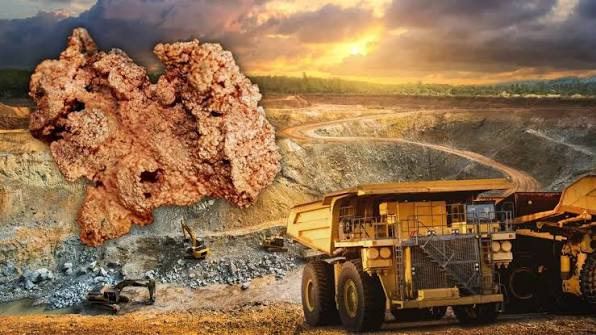
Copper Mining connects geological resources hidden beneath the earth with materials used throughout everyday life. Copper supports electrical systems, buildings, transportation, communications, and many forms of modern infrastructure. However, getting copper from mineral-bearing rock to usable material involves much more than excavation. Exploration, engineering, worker safety, environmental management, processing, and reclamation all form important parts of the complete mining cycle.
Why Copper Has Lasting Importance
Copper has several characteristics that make it valuable for industrial and infrastructure applications. It conducts electricity effectively, transfers heat efficiently, can be formed into different shapes, and can be recycled repeatedly.
These qualities have kept copper relevant even as technology has changed. Electrical networks, motors, wiring, construction materials, industrial equipment, and transportation systems all depend on reliable conductive materials.
As a result, Copper Mining helps provide a resource connected to both established infrastructure and future development.
The Journey Begins Beneath the Surface
Every mine begins with geology. Mineral deposits form through natural processes that may occur over millions or even billions of years. Finding these deposits requires detailed scientific investigation.
Geologists study exposed rocks, geological maps, historical information, and underground samples. Drilling can provide cores that reveal the composition of rock at different depths.
Understanding a Mineral Deposit
Once exploration identifies copper-bearing formations, specialists analyze the available information. They want to understand the deposit’s shape, depth, thickness, mineral concentration, and surrounding rock conditions.
These details can influence whether Copper Mining is technically feasible and which extraction method may be suitable.
Geological modeling can also help engineers visualize underground conditions. Instead of making decisions based on individual samples alone, specialists can combine information from many sources to create a broader picture of the mineralized area.
Designing an Underground Operation
Some copper deposits occur relatively close to the surface, while others lie deeper underground. When mineralization is located beneath substantial rock cover, underground mining methods may be considered.
An underground Copper Mining operation requires carefully planned access. Engineers may design tunnels, ramps, ventilation routes, working areas, and transportation systems around the characteristics of the deposit.
Worker safety remains a major consideration throughout this process. Ground conditions must be evaluated, underground openings supported where necessary, and ventilation designed to maintain appropriate working conditions.
Technology Below Ground
Modern equipment can improve precision and efficiency underground. Specialized machinery assists with drilling, material movement, rock handling, and maintenance.
Monitoring technologies can also provide information about equipment performance and underground conditions. These tools support informed decision-making while helping workers identify operational issues more quickly.
Technology does not eliminate the complexity of Copper Mining, but it can provide teams with better information for managing that complexity.
What Happens After Rock Is Extracted?
Extracting mineral-bearing rock is only one stage of the process. Copper minerals are generally mixed with other naturally occurring materials, so additional processing is required.
The rock may first be crushed into smaller pieces. Grinding can reduce those pieces further, allowing valuable mineral particles to be separated more effectively.
Mineral concentration techniques then help separate copper-bearing material from surrounding rock. The exact approach depends on the mineral characteristics and processing strategy.
Efficient Resource Recovery
Processing efficiency matters because mineral deposits contain finite resources. Recovering valuable minerals effectively can reduce unnecessary material movement and improve the overall use of extracted rock.
For this reason, Copper Mining involves cooperation among geologists, engineers, processing specialists, equipment operators, and laboratory professionals.
Each group contributes knowledge that helps turn geological information into practical operating decisions.
Water Management and Environmental Planning
Water is an important consideration at many mine sites. Rainfall, groundwater, surface drainage, and operational water all require appropriate management.
Modern Copper Mining planning can include collection systems, treatment methods, monitoring locations, and engineered controls designed around site-specific conditions.
Environmental specialists may also study wetlands, vegetation, wildlife, surface water, and groundwater before significant development begins. Baseline information helps establish existing conditions and supports future monitoring.
Monitoring Throughout Operations
Environmental management is not limited to the planning stage. Monitoring can continue throughout construction and active mining.
Data collected over time allows specialists to compare actual conditions with expectations. If circumstances change, management practices can be reviewed and adjusted when appropriate.
This ongoing approach makes environmental monitoring an important component of responsible Copper Mining.
The Human Side of Mining
Although mining is often associated with heavy machinery, people remain central to every operation. A modern mine can require geologists, engineers, mechanics, electricians, equipment operators, environmental specialists, safety professionals, and administrative workers.
Copper Mining may also generate activity beyond the mine itself. Transportation, construction, maintenance, technical support, and supplies can connect mineral development with the broader regional economy.
Workforce training is particularly important because many mining occupations require specialized technical skills.
Planning for Closure From the Beginning
A responsible mining plan considers the entire life of an operation. Eventually, economically recoverable material is exhausted and active extraction ends.
Closure planning may address underground openings, infrastructure, water systems, disturbed land, vegetation, and long-term monitoring. Reclamation aims to leave affected areas stable and appropriately managed.
Including closure considerations early allows Copper Mining decisions made during operation to account for future land-management responsibilities.
Conclusion
Copper Mining is a long-term process that combines geology, engineering, technology, environmental science, skilled labor, and careful planning. Long before mineral-bearing rock reaches the surface, specialists must understand underground conditions and determine how resources can be accessed responsibly. Processing, water management, monitoring, and reclamation add further layers of responsibility. By viewing mining as a complete life cycle rather than a single extraction activity, it becomes easier to understand how copper resources can contribute to modern infrastructure while requiring thoughtful management from exploration through closure.
