

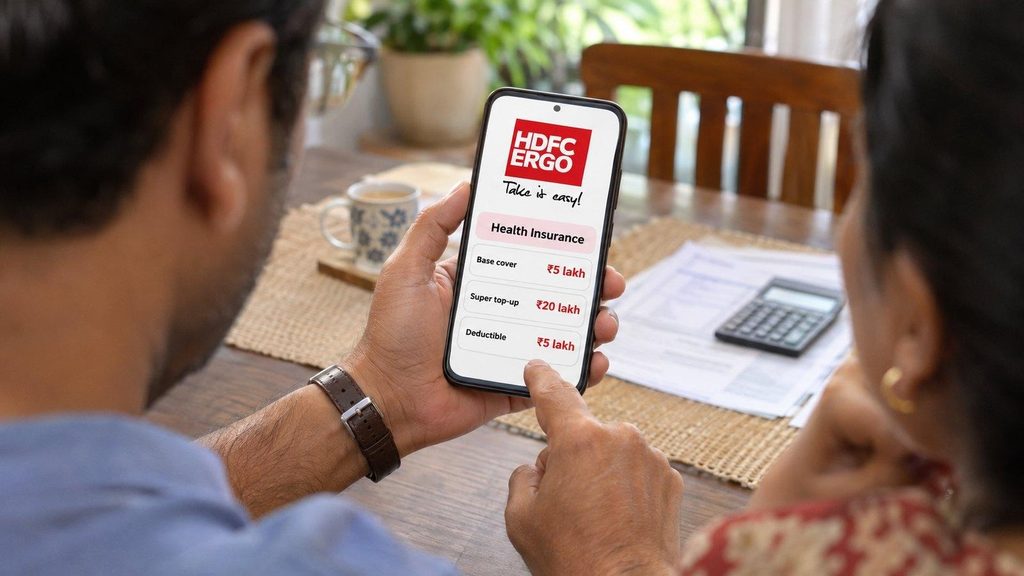
Medical costs in India rarely stay stagnant. A hospital stay that cost ₹3 lakh a decade ago can easily cross ₹8 lakh today, and that is before accounting for complications, specialist fees or follow-up care. Many families still rely on a base policy of ₹5 lakh or ₹10 lakh, assuming it will see them through any emergency.
Yet a single serious illness can exhaust that cover within days. Whether you choose to buy medical insurance online or through an agent, it is worth asking if your protection is truly adequate. This blog explains how to assess your current cover, how a super top-up plan works, and when adding one makes sense.
How to Tell If Your Current Cover Falls Short
A sum insured that looked generous when you bought it may no longer be enough. Healthcare inflation in India has been running at roughly 12 to 14 per cent a year, which means treatment costs double in about six years. Residents of metropolitan cities such as Kolkata, Mumbai and Delhi face even higher bills, particularly at private hospitals.
Consider these warning signs:
- Your sum insured has not increased in the last three to five years.
- You live in a metro city where room rents and procedure charges are high.
- Your family has a history of heart disease, diabetes or cancer.
- You have dependent parents or young children on the same policy.
- Your cover comes only from your employer, which may end if you change jobs.
If two or more of these apply, your cover may be thinner than you realise.
What Is a Super Top-Up Plan?
A super top-up plan is an additional policy that pays only after your claims in a policy year cross a chosen limit, known as the deductible. Unlike a regular top-up, which applies the deductible to each individual claim, a super top-up adds up all claims made during the year. This makes it considerably more useful when you face more than one hospitalisation.
For example, suppose you hold a base policy of ₹5 lakh and a super top-up of ₹20 lakh with a ₹5 lakh deductible. If you are hospitalised twice in a year, with bills of ₹4 lakh and ₹7 lakh, your base policy pays ₹5 lakh in total, and the super top-up covers the remaining ₹6 lakh. A regular top-up would not have responded to either claim, as neither bill individually exceeded ₹5 lakh.
Base Policy, Top-Up and Super Top-Up Compared
| Feature | Base Policy | Regular Top-Up | Super Top-Up |
| Pays from the first rupee | Yes | No | No |
| Deductible applies to | Not applicable | Each claim separately | Total claims in a year |
| Premium | Highest | Low | Low to moderate |
| Best suited for | Everyday cover | Single large claims | Multiple or very large claims |
Is Super Top-Up Worth It?
This is the question most policyholders ask, and the honest answer is that it usually is, provided your base policy is sound. Increasing a base plan from ₹5 lakh to ₹25 lakh can be expensive. A super top-up delivers a similar level of protection at a fraction of the cost, often at one-third of the premium or less. It is a practical way to build a larger safety net without straining your household budget.
However, it is not a replacement for a base policy. It will not pay anything until your deductible is crossed, so you still need primary cover for routine hospitalisations.
Factors to Consider Before You Choose
Before committing, weigh the following carefully:
- Deductible: Match it to your base sum insured so there is no gap between the two policies.
- Waiting periods: Pre-existing conditions are usually subject to a fresh waiting period.
- Room rent limits: Check for sub-limits that could reduce your payout.
- Network hospitals: Confirm that your preferred hospitals offer cashless treatment.
- Co-payment clauses: Some plans require you to bear a percentage of every claim.
It also helps to compare plans side by side. Many people now prefer to buy medical insurance online, as it allows quick comparison of premiums, features and claim settlement records without any pressure to decide on the spot.
Who Should Consider Adding One?
A super top-up is particularly sensible for young families, individuals in metro cities, and those approaching their fifties. It also suits anyone whose only cover is an employer’s group policy. Senior citizens with existing policies should check the waiting periods before adding one.
Conclusion
A base policy alone may not protect you against the rising cost of serious illness. A super top-up offers a sensible and affordable way to extend your cover, provided you choose the deductible carefully and read the terms closely. Review your existing policy this month, estimate your likely needs, and compare options before deciding. A little planning today can spare your family considerable financial stress when it matters most.