

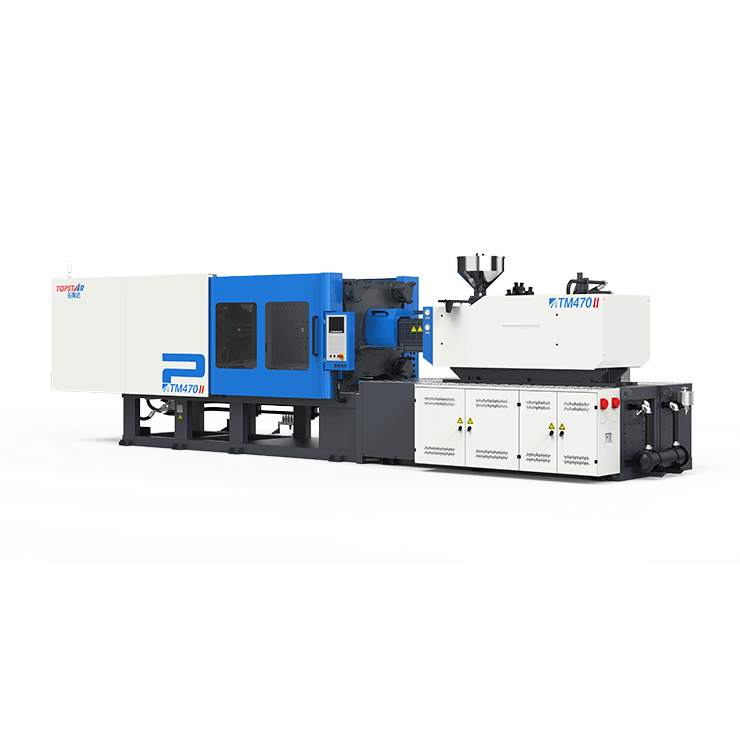
Shot-to-shot variation is one of the most persistent obstacles to high process capability. At Topstar, as a Product Marketing Manager with deep expertise in molding equipment, I work with manufacturers who need every cycle to deliver nearly identical weight, dimensions, and appearance. Modern plastic molding machine control technology reduces that variation by closing the loop on velocity, pressure, position, and temperature in real time. When the machine repeatedly executes the same injection and packing profile, it produces consistent parts even as material or ambient conditions shift slightly. This article explains how plastic molding machine control technology reduces shot-to-shot variation. Drawing from Topstar’s control-system design and process results, we outline the practical mechanisms that turn programmed parameters into repeatable cavity conditions on the plastic injection molding machine and the broader molding machine platform.
Closed-Loop Velocity Control on the Plastic Molding Machine
Closed-loop velocity control is the first major contributor to lower shot-to-shot variation. An advanced plastic molding machine continuously measures actual screw speed and corrects the drive output so that the melt advances according to the set profile. Open-loop systems merely command a valve or motor setting; they cannot reject disturbances caused by viscosity changes or minor mechanical friction. Topstar applies high-response closed-loop injection control on its platforms so that fill time and flow-front behavior remain stable from cycle to cycle. When velocity is truly controlled, each shot delivers a nearly identical melt volume under similar shear conditions. This consistency directly reduces weight and dimensional scatter on the injection molding machine and forms the foundation for further variation reduction on the plastic injection molding machine.
Precise Switchover and Pressure Control on the Plastic Molding Machine
Precise switchover and pressure control lock in the cavity state at the transition from filling to packing. Small differences in the transfer point change the amount of melt in the cavity and force the holding phase to compensate differently for each shot. A modern plastic molding machine uses accurate position or pressure switchover with closed-loop confirmation, then maintains the programmed holding pressure with equal precision. Topstar systems execute multi-stage holding profiles with high fidelity. Because the pressure applied during the critical packing window stays consistent, volumetric shrinkage is compensated uniformly. As a result, the molding machine achieves tighter control over part density and critical dimensions. More importantly, reliable switchover and pressure control turn a major source of shot-to-shot variation into a stable, repeatable process segment on the plastic injection molding machine.
Position and Stroke Repeatability of the Plastic Molding Machine
Position and stroke repeatability ensure the injection unit and clamp move the same way every cycle. Encoder feedback and rigid mechanical design allow the plastic molding machine to return to the same cushion position, recovery stroke, and clamp force set-points with minimal deviation. Variation in these mechanical endpoints appears as variation in shot size or cavity volume. Topstar engineers both the control loops and the mechanical structure to keep position control accurate under production loads. Consistent cushion values, in particular, give operators an immediate indicator that shot volume is stable. High stroke and position repeatability remove another layer of mechanical variation from the injection molding process and support long-term capability on the plastic molding machine.
Temperature Control Integration in the Plastic Molding Machine
Temperature control integration stabilizes the thermal conditions that influence viscosity and shrinkage. Barrel and nozzle temperature variations change melt flow; mold-temperature variations change cooling rates. A capable plastic molding machine maintains tight tolerances across its heating zones and provides stable interfaces to external mold-temperature controllers, keeping the entire thermal environment steady. When temperatures are controlled, the melt’s rheological behavior and the part’s shrinkage behavior stay predictable. Topstar designs its temperature systems and communication links to minimize thermal drift, allowing the velocity and pressure loops to operate on a consistent material baseline. Thermal stability multiplies the effectiveness of all other control technologies on the plastic injection molding machine and the molding machine as a whole.
Real-Time Monitoring and Adaptive Response of the Plastic Molding Machine
Real-time monitoring and adaptive response keep variation low over long runs. Sensors track injection pressure curves, screw position, cycle timing, and temperatures. When values approach control limits, the plastic molding machine can alarm or apply limited adaptive corrections within validated ranges. Historical data support root-cause analysis and continuous improvement. Topstar equips its machines with comprehensive process monitoring so that operators and engineers see shot-to-shot behavior as it happens. Early detection of drift prevents large quantities of out-of-spec parts and protects the capability gains achieved by closed-loop control. Monitoring turns short-term repeatability into sustained consistency on the injection molding machine.
Practical Results of Advanced Control Technology on the Plastic Molding Machine
Practical results appear as lower standard deviations in part weight, tighter dimensional distributions, and higher Cpk values. In practice, manufacturers running precision, medical, or high-appearance components routinely record measurable reductions in scrap and inspection effort once they fully use closed-loop control, accurate switchover, position repeatability, thermal stability, and monitoring on the plastic molding machine. To achieve these gains consistently, Topstar customers combine capable equipment with disciplined process setup. In this approach, the control technology provides repeatability, while process teams lock in the qualified window and maintain it. Together, these elements turn the plastic injection molding machine from a source of variation into a stable platform for statistical process control.
