

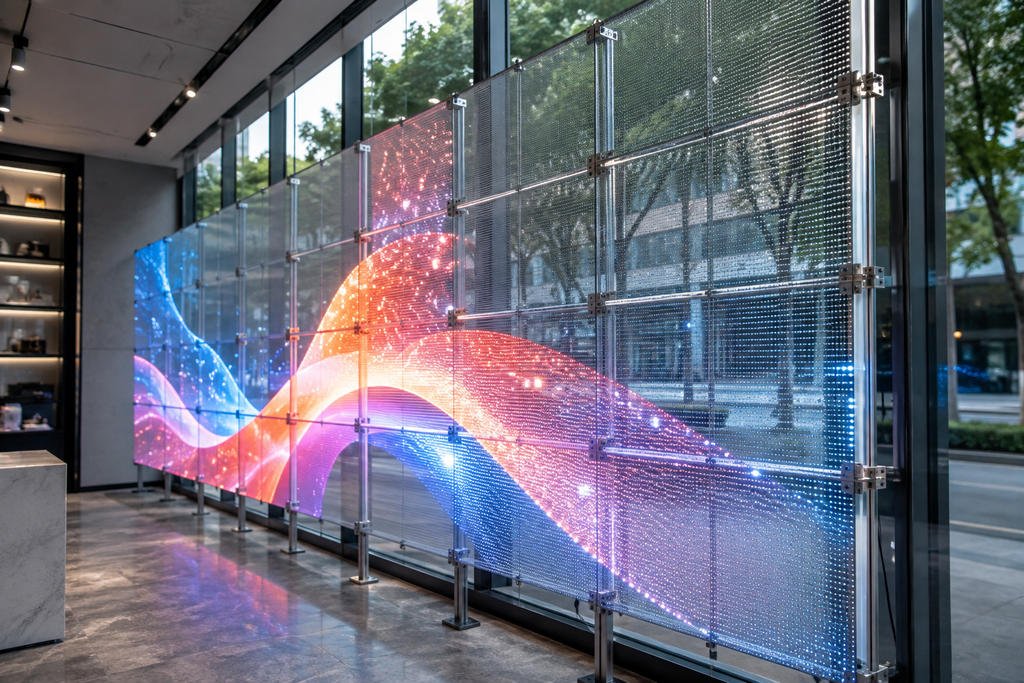
A Transparent LED Display can create digital content without building a completely solid visual wall. This makes it useful for exhibitions, product launches, corporate events, stage productions, and temporary brand installations.
Visitors can see animated content while still viewing products, performers or architectural elements behind the screen. The result can feel more open and layered than a conventional LED wall.
However, event projects place special demands on display equipment. Installation speed, transportation, structural safety, lighting conditions and repeated use are just as important as image quality.
Where Transparent Displays Are Used
Transparent LED screens can support several event applications:
- Exhibition booth entrances
- Product display zones
- Stage backgrounds
- Hanging visual structures
- Corporate launch events
- Museum exhibitions
- Retail pop-up installations
- Immersive brand environments
The screen can divide a space without making it feel closed. It can also be installed in front of products or scenery so that digital effects and physical objects appear in the same visual composition.
Reviewing the available LED display product range can help planners compare transparent displays with rental, flexible and creative LED systems before finalizing the event design.
Rental or Fixed-Installation Structure
An event screen normally needs to be assembled and dismantled quickly. Rental transparent LED cabinets are designed for repeated handling and may include quick locks, lightweight frames, and touring-friendly connection systems.
A fixed transparent screen is intended for long-term operation and may prioritize structural integration and maintenance access instead.
Even when an exhibition lasts several weeks, a rental-style product may be more practical if the equipment must be transported and installed again at another venue.
Project teams should evaluate complete LED display solutions rather than selecting panels without considering rigging, controllers, cables, spare parts, and installation labor.
Transparency Versus Image Strength
A Transparent LED Display must balance openness with visual performance. Higher transparency can preserve the environment behind the screen, but the image may appear lighter under strong surrounding illumination.
A denser display can create a stronger image but may look more like a conventional LED wall.
The correct balance depends on how the screen will be used. A transparent stage background may need to reveal performers and lighting effects. A product-launch screen may need stronger image contrast so that text and product graphics remain clear.
Different structures should also be compared. A product such as the StarLink transparent LED film display may suit glass-based creative installations, while modular transparent cabinets may be more practical for repeated rental use.
Viewing Distance and Screen Resolution
Pixel pitch should be selected according to the closest audience position. Exhibition visitors may stand only a few meters from the screen, while a concert audience may view it from much farther away.
A finer pixel pitch improves close-range detail but increases system complexity and cost. A wider pitch may be sufficient for a large stage screen viewed from a distance.
Screen dimensions and pixel pitch determine the total resolution. The content team should receive the exact pixel canvas before producing videos. Otherwise, important text or graphics may appear too small, distorted or incorrectly positioned.
Brightness and Event Lighting
Event lighting can change throughout the day and during different parts of a show. Exhibition halls may have strong overhead lighting, while stage productions may use moving lights, spotlights and dark scenes.
The display should provide enough brightness and contrast without overpowering nearby products or performers. Brightness adjustment is especially useful when the same screen operates during rehearsals, daytime exhibitions and evening presentations.
For installations near windows or outdoor entrances, daylight must also be considered.
Rigging and Structural Safety
Transparent screens may look lightweight, but every hanging or freestanding system needs proper structural planning.
The project team should confirm:
- Total screen weight
- Hanging or ground-support method
- Load capacity of the venue
- Wind exposure for outdoor events
- Cabinet locking system
- Cable routing
- Emergency access
- Maintenance position
Only compatible rigging equipment should be used. Creative shapes and suspended installations may require additional engineering and on-site testing.
Camera and Broadcast Performance
Many corporate events and product launches are recorded or streamed. The screen should therefore be tested with the cameras used by the production team.
Refresh rate, scan method, shutter settings, grayscale and color performance can affect how the display appears on camera. A screen that looks smooth to the eye may show scanning lines or flicker in recorded footage if the system is not configured correctly.
Camera tests should be completed before the live event whenever possible.
Content Designed for Transparency
Transparent LED content should make use of the space behind the screen. A standard full-frame video can reduce the sense of depth and make the display appear more solid.
Effective content may include:
- Floating text
- Product outlines
- Particle animations
- Layered brand graphics
- Transparent backgrounds
- Short motion sequences
- Visual effects synchronized with lighting
Designers should know which physical objects or performers will appear behind the display. This allows digital and physical elements to work together rather than compete for attention.
The World Police Summit transparent display project shows how transparent visuals can become part of a large exhibition environment while preserving depth and openness.
Logistics and Spare Parts
Event equipment is transported, assembled and handled frequently. The package should include protective flight cases, power and signal cables, hanging bars and suitable spare parts.
Spare LED modules, receiving cards and power supplies should be available during important events. Technicians should also have access to configuration files and a clear replacement procedure.
A low panel price may not represent the real project cost if essential accessories and support are missing.
Common Planning Mistakes
Several mistakes can reduce the impact of a Transparent LED Display:
- Selecting the product before confirming the viewing distance.
- Ignoring the effect of venue lighting.
- Using content designed for a solid LED wall.
- Failing to test the screen with cameras.
- Underestimating rigging and installation time.
- Forgetting spare parts and backup signal paths.
- Placing the screen where cables block visitor movement.
- Comparing panel prices without comparing complete systems.
Avoiding these issues requires coordination between the display supplier, event producer, structural team and content designer.
Conclusion
A Transparent LED Display can give events and exhibitions a layered visual effect that conventional screens cannot easily reproduce. It allows digital content, products, architecture and performers to remain visible within the same space.
The best system is not necessarily the one with the highest transparency or smallest pixel pitch. It is the one that matches the viewing distance, venue lighting, structural requirements, content plan and event schedule.
Event teams can contact JR Visual with their screen dimensions, venue information and installation drawings to receive a project-specific display recommendation.
