

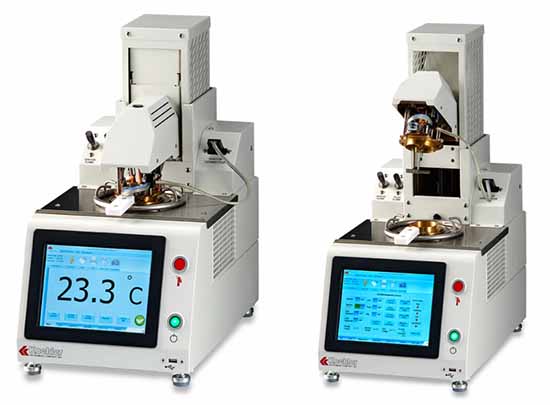
Determining the flash point of a material is an important part of laboratory analysis for fuels, oils, solvents, chemicals, and other volatile substances. The result helps laboratory professionals understand how a sample behaves when exposed to controlled heating and an ignition source. For reliable results, the testing equipment and procedure must match the characteristics of the material being analyzed.
A closed cup flash point tester is designed to perform flash point measurements while the sample remains inside a covered test vessel. This controlled arrangement helps retain vapors during heating and provides repeatable conditions for determining when ignition occurs.
Understanding Closed Cup Flash Point Testing
Flash point refers to the lowest temperature at which a material produces sufficient vapor to ignite when exposed to an ignition source under defined test conditions. It does not necessarily mean that the material will continue burning after the initial flash.
The design of the test system has a significant influence on the measured value. In closed cup testing, the sample is heated inside a covered vessel. Vapors accumulate in the space above the liquid rather than escaping freely into the surrounding environment.
Because of these controlled conditions, laboratories should use the appropriate test configuration consistently when comparing results.
How Does a Closed Cup Flash Point Tester Work?
Although operating procedures vary according to the chosen method, the general process begins by introducing a specified amount of sample into a clean test cup.
The cup is then covered, and the sample is heated according to controlled conditions. At predetermined stages, an ignition source is introduced to determine whether the vapor above the sample produces a flash.
Importance of Controlled Heating
Heating rate is a critical part of the procedure. Increasing the sample temperature too quickly can alter the conditions under which vapors develop. Heating too slowly may also affect test efficiency and procedural consistency.
A closed cup flash point tester helps laboratory personnel maintain the controlled conditions required for repeatable analysis. Operators should still follow the applicable testing procedure carefully and confirm that the equipment is operating correctly before beginning a measurement.
Why Laboratories Use Closed Cup Testing
Closed cup testing can be useful when laboratories need standardized flash point measurements for volatile or combustible materials. The covered test vessel limits vapor loss and creates defined conditions throughout the analysis.
Laboratories may perform these measurements as part of incoming material inspection, production monitoring, research, formulation studies, or final quality verification.
Supporting Quality Control
Quality-control teams often need to compare multiple samples against established specifications. Consistent test conditions are essential because variations in sample handling or equipment operation may affect the measured flash point.
Using a closed cup flash point tester within a documented procedure can help technicians maintain a repeatable workflow across different batches and testing periods.
Sample Preparation Can Influence Results
Even well-designed equipment cannot compensate for poor sample handling. Contamination, evaporation, incorrect sample volume, or residues from previous tests may influence measurements.
Samples containing volatile components should be handled carefully to minimize unnecessary exposure before analysis. Containers should remain properly closed when appropriate, and samples should not be subjected to conditions that could significantly alter their composition.
Keep the Test Cup Clean
Residue from an earlier test can affect a later sample. Laboratory personnel should inspect and clean the test cup according to established procedures between analyses.
The cup should also be allowed to reach suitable starting conditions before another test begins. Consistent cleaning practices contribute to dependable results and help reduce cross-contamination.
Choosing the Right Testing Configuration
Before selecting a closed cup flash point tester, laboratories should consider the types of materials they analyze and the procedures they are required to follow.
Temperature range is another important factor. Equipment should comfortably support the expected flash point range of routine samples without introducing unnecessary complexity.
Testing frequency should also influence the decision. A busy laboratory processing numerous samples may prioritize efficient controls and repeatable operation, while a facility conducting occasional measurements may focus more heavily on straightforward setup and maintenance.
Operator Technique Still Matters
Laboratory automation and controlled equipment can reduce certain sources of variation, but trained operators remain essential.
Technicians need to understand sample preparation, heating conditions, ignition procedures, equipment cleaning, and result documentation. They should also recognize unusual behavior during testing and know when a result may require investigation or repetition.
Create a Standardized Workflow
A clear testing procedure can define sample volume, preparation steps, equipment checks, heating requirements, ignition intervals, cleaning procedures, and documentation practices.
When everyone follows the same process, results become easier to compare between operators and over time. Standardized workflows also simplify staff training and help laboratories maintain consistent analytical practices.
Maintaining Reliable Flash Point Equipment
Routine inspection helps keep a closed cup flash point tester operating properly. Laboratories should examine components involved in heating, temperature measurement, ignition, stirring where applicable, and sample containment.
Verification and calibration practices should follow laboratory requirements and the applicable test procedure. Maintenance activities should also be documented so technicians can identify changes in equipment performance over time.
Conclusion
Closed cup flash point testing provides laboratories with a controlled method for evaluating the ignition behavior of volatile materials. By retaining vapors within a covered vessel and carefully managing heating and ignition conditions, the procedure supports consistent analytical measurements.
A closed cup flash point tester can become a valuable part of quality control, research, and routine laboratory testing when combined with careful sample handling, trained operators, clean equipment, and standardized procedures. Focusing on the complete testing workflow helps laboratories achieve results that are both dependable and meaningful.
