

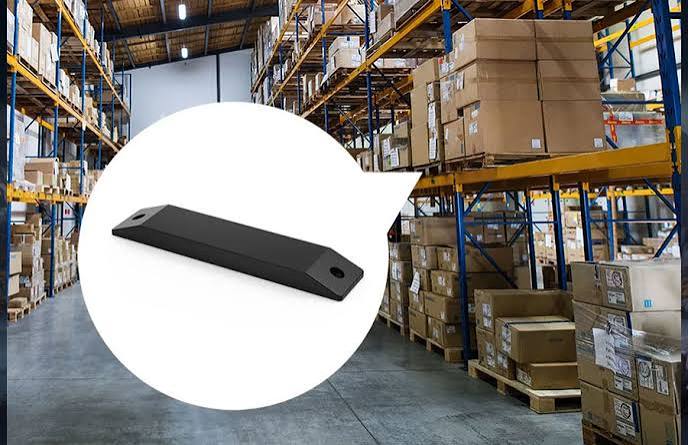
RFID tags have become an essential component of modern identification and tracking systems, helping businesses improve visibility, automate processes, and increase operational efficiency. RFID, or Radio Frequency Identification, is a technology that uses radio waves to identify and exchange information between a tag and a reader without requiring direct contact. Unlike traditional barcodes that need to be scanned individually and within a direct line of sight, RFID tags can be read from a distance and multiple tags can be detected simultaneously. This capability has made RFID technology increasingly valuable across industries where speed, accuracy, and automation are important. RFID tags generally consist of a microchip for storing data and an antenna for transmitting information. Depending on the application, tags can be passive, active, or semi-passive. Passive RFID tags do not contain their own power source and rely on the reader’s signal for activation, making them cost-effective and suitable for high-volume applications. Active RFID tags include an internal battery, allowing them to transmit signals over longer distances and support advanced monitoring functions. Semi-passive tags combine characteristics of both technologies, offering enhanced performance while maintaining efficient energy consumption. Businesses use RFID tags to identify products, monitor inventory, manage assets, and improve workflow efficiency. Because the technology reduces manual scanning and minimizes human error, organizations experience better inventory accuracy and faster processing times. The increasing affordability of RFID solutions has also encouraged businesses of all sizes to adopt the technology. As digital transformation continues across industries, RFID tags are becoming an important foundation for connected operations, supporting real-time visibility and intelligent decision-making.
Applications of RFID Tags Across Multiple Industries
RFID tags are used in a wide range of industries because they provide reliable identification and tracking solutions for many different types of assets. In retail, RFID technology allows businesses to maintain accurate inventory records, improve stock replenishment, reduce product losses, and enhance customer satisfaction. Retail employees can quickly locate products, perform inventory counts in a fraction of the time required by traditional methods, and improve product availability on store shelves. In logistics and supply chain management, étiquettes RFID enable organizations to monitor shipments throughout transportation, improving visibility from manufacturing facilities to distribution centers and final delivery locations. Warehouses benefit from faster receiving, picking, packing, and shipping operations because RFID readers automatically capture information without requiring manual barcode scanning. Healthcare organizations also depend on RFID tags for equipment tracking, patient identification, medication management, and inventory control. Hospitals can locate medical devices more efficiently, reducing equipment loss and improving patient care. Manufacturing companies use RFID technology to monitor production processes, track work-in-progress items, and improve quality assurance throughout assembly operations. Educational institutions utilize RFID-enabled identification cards for attendance tracking, library management, and campus access control. Transportation systems use RFID tags for electronic toll collection, fleet management, and vehicle identification, improving traffic flow and reducing waiting times. Agriculture has also adopted RFID technology for livestock identification, equipment monitoring, and supply chain traceability. Even the hospitality industry benefits from RFID-enabled access cards that provide secure room entry and improve guest experiences. The flexibility of RFID technology allows organizations to customize solutions according to their operational requirements, making RFID tags valuable across both commercial and industrial environments.
Benefits of RFID Tags for Business Efficiency and Asset Management
The growing adoption of RFID tags is largely driven by the significant operational benefits they provide. One of the most important advantages is improved inventory accuracy. Traditional inventory management often relies on manual counting and barcode scanning, both of which require considerable labor and are susceptible to human error. RFID systems automate data collection, allowing organizations to maintain highly accurate inventory records while reducing labor costs. Faster inventory counting enables businesses to perform more frequent stock verification without disrupting normal operations. Another major benefit is enhanced asset visibility. Companies can monitor valuable equipment, tools, vehicles, and products in real time, making it easier to locate assets and reduce unnecessary replacements. RFID tags also improve supply chain transparency by providing continuous tracking throughout production, transportation, storage, and delivery. This visibility helps businesses identify bottlenecks, optimize workflows, and respond quickly to operational challenges. Security is another important advantage because RFID systems can help prevent theft, unauthorized asset movement, and counterfeit products through accurate identification and tracking. Businesses also experience faster receiving and shipping processes because RFID readers automatically identify multiple items simultaneously, reducing processing time at warehouses and distribution centers. Improved automation contributes to better productivity by minimizing repetitive manual tasks and allowing employees to focus on higher-value responsibilities. Data collected through RFID systems can also support business analytics, helping managers identify trends, forecast demand, optimize inventory levels, and improve strategic planning. As companies continue investing in digital transformation initiatives, RFID technology supports seamless integration with enterprise resource planning systems, warehouse management software, and Internet of Things platforms. This combination creates a more connected operational environment where accurate data is continuously available for informed decision-making.
Factors to Consider When Selecting RFID Tags
Choosing the right RFID tags requires careful evaluation of operational requirements, environmental conditions, and technical specifications. One of the first considerations is determining whether passive, active, or semi-passive tags best match the intended application. Passive tags are generally suitable for inventory management, retail, and supply chain operations because they offer lower costs and require minimal maintenance. Active tags are more appropriate for tracking high-value assets across larger areas where extended read ranges are necessary. The operating frequency also plays an important role in RFID system performance. Low-frequency tags perform well around liquids and metals but typically offer shorter reading distances. High-frequency tags are commonly used for identification cards, payment systems, and document management. Ultra-high-frequency tags provide longer read ranges and faster data transfer, making them ideal for logistics, warehousing, and industrial applications. Environmental durability should also be evaluated carefully. Some RFID tags are specifically designed to withstand extreme temperatures, moisture, chemicals, vibration, or outdoor conditions. Industrial environments often require rugged tags that continue operating under demanding conditions. Tag size, mounting method, memory capacity, and data security features should also align with operational needs. Organizations must ensure compatibility between RFID tags, readers, antennas, and software platforms before implementation. Regulatory compliance may vary depending on geographic regions and industry standards, making it important to select products that meet applicable requirements. Businesses should also consider future scalability when designing RFID systems so that additional assets, facilities, or operational processes can be integrated without significant infrastructure changes. Working with experienced RFID solution providers can help organizations identify the most appropriate hardware, software, and implementation strategies to maximize long-term value while minimizing deployment challenges.
The Future of RFID Tags in Smart and Connected Industries
RFID tags will continue playing an increasingly important role as businesses embrace automation, digital transformation, and intelligent data management. The integration of RFID technology with the Internet of Things, cloud computing, artificial intelligence, and advanced analytics is creating smarter operational environments capable of delivering real-time insights and predictive decision-making. Modern RFID systems are no longer limited to simple identification tasks but are becoming part of comprehensive digital ecosystems that continuously monitor assets, inventory, equipment, and operational performance. Smart warehouses are using RFID technology alongside robotics and automated storage systems to improve order fulfillment speed and inventory accuracy. Manufacturing facilities are implementing RFID-enabled production lines that provide continuous visibility into materials, components, and finished products while supporting predictive maintenance strategies. Healthcare organizations are expanding RFID applications to improve patient safety, automate medication management, and optimize equipment utilization. Retailers continue enhancing customer experiences through automated checkout systems, real-time inventory visibility, and improved product availability. Sustainability initiatives also benefit from RFID technology by reducing waste, improving resource utilization, and supporting product traceability throughout the supply chain. As RFID hardware becomes more compact, affordable, and energy efficient, adoption is expected to increase among small and medium-sized businesses as well as large enterprises. Advances in chip technology, sensor integration, and wireless communication will further expand the capabilities of RFID tags beyond simple identification, enabling environmental monitoring, condition tracking, and intelligent asset management. Organizations investing in RFID solutions today are building the foundation for more connected, efficient, and data-driven operations that can adapt to evolving market demands. As industries continue embracing smart technologies, RFID tags will remain a critical component of modern business infrastructure, supporting greater operational efficiency, enhanced visibility, improved security, and sustainable long-term growth.
