

A bathroom renovation is one of the biggest home improvement investments most Finnish households make. It is also one of the projects where budgets most often go wrong. Unexpected moisture damage, last-minute material upgrades and poorly defined quotes can push costs far beyond the original estimate. This guide explains what drives the price of a bathroom renovation, how to build a realistic budget and how to save money without compromising quality.
What Affects the Cost of a Bathroom Renovation?
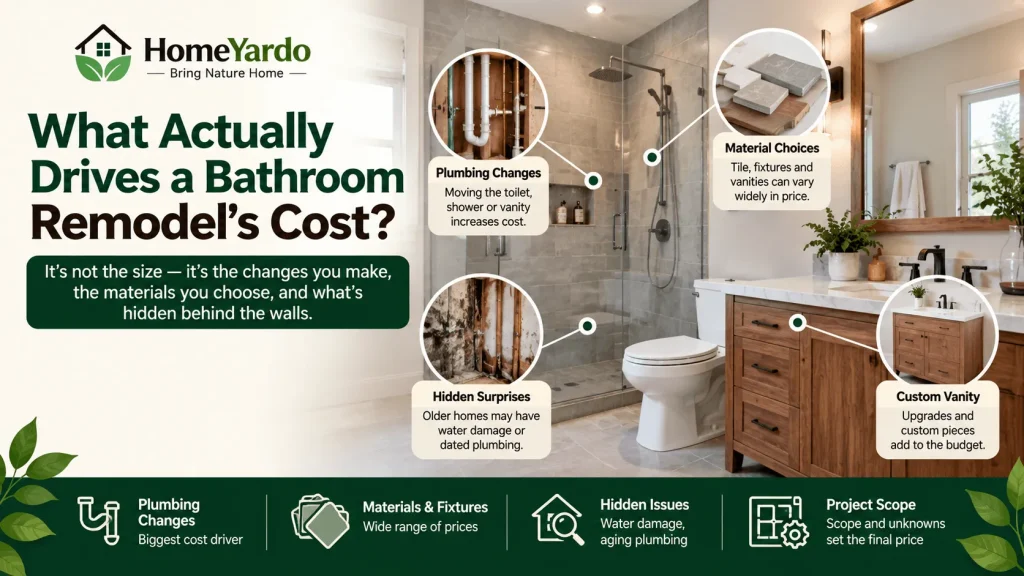
No two bathrooms are the same, so prices vary considerably. The main factors that influence cost are:
- Size of the room: more square metres mean more waterproofing, tiles and labour.
- Scope of work: a surface refresh costs a fraction of a full renovation down to the structure.
- Condition of the structures: moisture damage or old pipes increase the workload.
- Materials: designer tiles and premium fixtures can double the material budget.
- Additional features: underfloor heating, a sauna or new ventilation add cost.
- Building type: apartments often require supervision by the housing company.
Typical Cost Breakdown
Although every project is unique, the budget of a full bathroom renovation is usually divided roughly as follows:
- Labour: 50 to 60 percent
- Materials and fixtures: 30 to 40 percent
- Plumbing and electrical work: 10 to 15 percent
- Waste disposal, protection and supervision: 5 percent
Because labour forms the largest share, the experience and efficiency of your contractor have a big impact on the final price.
Use the Tax Credit for Household Expenses
One of the best ways to reduce the real cost of a renovation in Finland is the tax credit for household expenses (kotitalousvähennys). It allows you to deduct part of the labour cost of renovation work done in your home from your taxes. Each spouse can claim it separately, which can double the benefit for couples. Detailed rules and the current percentage and maximum amounts are published by the Finnish Tax Administration.
To claim the credit, ask your contractor to state the labour share separately on the invoice and check that the company is listed in the prepayment register. Pay the invoices from your own account and keep the receipts.
Plan for Hidden Expenses
Hidden costs are the main reason renovation budgets fail. Once the old tiles and waterproofing are removed, contractors may discover:
- Moisture damage in walls or floors
- Corroded pipes or outdated drains
- Uneven floors that need a new screed
- Electrical wiring that does not meet current standards
A sensible rule is to reserve a contingency of 10 to 20 percent of the total budget. If it is not needed, you can use it for upgrades at the end of the project.
Compare Quotes the Smart Way
Ask at least three contractors for written quotes and make sure they cover exactly the same scope. A low price often means that something is missing, such as waste removal, waterproofing documentation or the cost of fixtures. Check whether the quote is a fixed price or based on hourly rates, and how additional work will be priced. Always confirm the payment schedule in writing; reputable companies tie payments to completed work phases.
For homeowners in the capital region, a local specialist such as Kylpyhuoneremontti Vantaa can provide a clear, itemised estimate after inspecting the bathroom on site.
Smart Ways to Save Money
- Keep the layout: moving the toilet or drain increases plumbing costs considerably.
- Choose mid-range tiles: many affordable tiles look just as good as premium brands.
- Buy fixtures in advance: look for seasonal sales, but agree with the contractor which models are compatible.
- Do simple tasks yourself: emptying the room or painting ceilings can reduce labour hours.
- Schedule wisely: some contractors offer better prices outside the busiest seasons.
Never save on waterproofing, drains or ventilation. These elements determine whether your bathroom stays dry and healthy for decades.
Financing Your Renovation
Many households finance bathroom renovations with savings, but banks also offer renovation loans or allow you to increase your mortgage. Compare interest rates and fees carefully. The Finnish Competition and Consumer Authority KKV provides independent advice on consumer credit and on your rights when buying services from contractors.
Conclusion
A well-planned budget turns a stressful renovation into a manageable project. Understand what drives costs, use the household tax credit, set aside a contingency and compare detailed quotes. With realistic expectations and the right contractor, you can enjoy a beautiful new bathroom without unpleasant financial surprises.
Frequently Asked Questions
How much contingency should I reserve for a bathroom renovation?
For newer homes, around 10 percent is usually enough. For older buildings, or if you already suspect moisture damage, reserve 15 to 20 percent so that unexpected repairs do not stop the project halfway.
Can I claim the household tax credit for materials?
No. The credit applies only to the labour share of the work. This is why it is important that your contractor itemises labour and materials separately on every invoice.
Is it cheaper to renovate in phases?
Rarely. Splitting a wet room renovation into several smaller projects usually means repeating demolition, protection and waterproofing work. Doing everything at once is almost always more cost-effective and safer for the structures.