

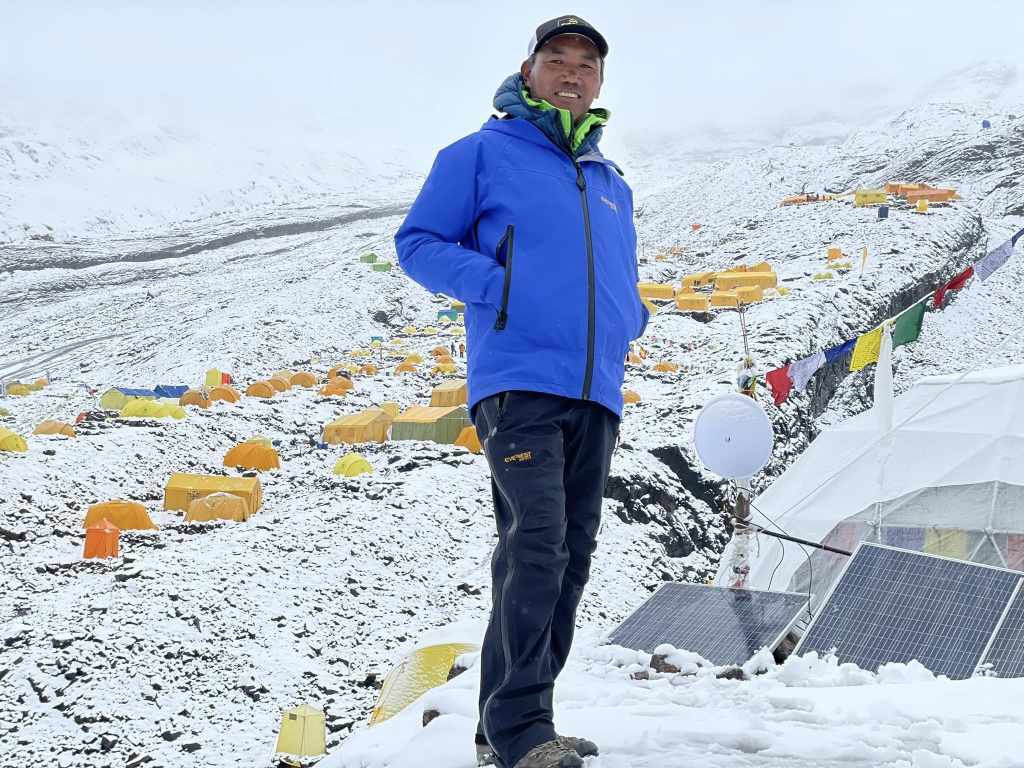
For many trekkers, completing the Everest Base Camp Trek is a life goal. Standing at the foot of the world’s highest mountain feels like the ultimate achievement. But above that base camp rises a far more extreme challenge.
While most visitors celebrate reaching 5,364 meters, one man has gone far beyond, climbing to the summit of Mount Everest more times than anyone in history.
His name is Kami Rita Sherpa, and his record-breaking career has reshaped what people believe is possible in high-altitude mountaineering.
This is the story of a climber whose life is deeply connected to Everest, not just as a mountain, but as a profession, heritage, and responsibility.
Early Life in the Khumbu Region
Kami Rita Sherpa was born in the Solukhumbu district of Nepal, in the shadow of Everest itself. Growing up in the Khumbu region means growing up with mountains as part of daily life. For many Sherpa families, mountaineering is not a sport but a livelihood.
His father was one of the first professional Sherpa guides after Nepal opened Everest to foreign climbers in the 1950s. From a young age, Kami Rita was exposed to expedition culture, high-altitude logistics, and the physical demands of mountain life. Climbing was not a hobby for him. It was a natural path shaped by geography and family tradition.
He began working as a high-altitude porter in his early twenties, gradually gaining experience on major Himalayan peaks before attempting Everest.
First Ascent of Mount Everest
Kami Rita first summited Mount Everest in 1994. That climb marked the beginning of a career that would eventually make history. At the time, no one imagined he would go on to break world records repeatedly.
Unlike many climbers who attempt Everest once as a personal challenge, Kami Rita’s role was different. He worked as a high-altitude guide, responsible not only for reaching the summit himself but also for supporting clients. This includes fixing ropes, carrying equipment, setting up camps, and ensuring the safety of others.
Every summit required strength, discipline, and careful decision-making.
Breaking the World Record
Over the years, Kami Rita continued to return to Everest season after season. With each successful ascent, he quietly moved closer to history. Eventually, he broke the record for the most summits of Everest, surpassing previous record holders and setting a new global benchmark.
What makes this record extraordinary is not just the number itself. It is the consistency required to climb above 8,000 meters repeatedly. The summit of Everest stands at 8,848.86 meters. At that altitude, oxygen levels are roughly one third of those at sea level. The human body deteriorates quickly in such conditions.
Each ascent involves weeks of acclimatization, navigating dangerous sections like the Khumbu Icefall, facing unpredictable weather, and enduring extreme cold. Even experienced climbers consider one summit a lifetime achievement. Kami Rita has done it dozens of times.
The Role of Sherpas in Everest Expeditions
To understand Kami Rita’s significance, it is important to understand the broader role of Sherpas in Himalayan expeditions. Sherpas are renowned for their high-altitude skills, endurance, and deep knowledge of mountain terrain.
Guides like Kami Rita carry heavy loads, fix ropes along dangerous routes, establish high camps, and often reach the summit multiple times within a single season. Their work ensures that international climbers can attempt the peak safely.
Despite their crucial role, Sherpas historically received less recognition than foreign climbers. Kami Rita’s record has helped bring greater global attention to the skill and professionalism of Nepali high-altitude guides.
Physical and Mental Strength at Extreme Altitude
Climbing Everest once demands peak physical fitness and mental resilience. Repeating that climb year after year requires long-term conditioning and discipline.
Above 8,000 meters lies what climbers call the “death zone,” where the body cannot adapt permanently. Prolonged exposure leads to muscle loss, extreme fatigue, and increased risk of life-threatening conditions such as high-altitude pulmonary edema and cerebral edema.
Kami Rita’s ability to perform consistently in such an environment speaks not only to genetic adaptation common among high-altitude Sherpa communities but also to decades of experience, technical skill, and psychological strength.
His success is not based on luck. It is based on preparation, patience, and respect for the mountain.
A Professional, Not a Publicity Seeker
One remarkable aspect of Kami Rita Sherpa is his humility. In interviews, he often states that he does not climb for records. He climbs because it is his profession. For him, Everest is work.
This perspective reflects the reality of many Nepali mountain guides. While international media celebrates record-breaking summits, for Sherpas the climbing season represents employment and responsibility.
Kami Rita has consistently emphasized teamwork over individual glory. He credits fellow guides and support staff for shared success.
Impact on Nepal’s Mountaineering Industry
Kami Rita’s achievements have strengthened Nepal’s reputation in the global mountaineering community. His record highlights the expertise of Nepali guides and reinforces the country’s central role in Himalayan expeditions.
Tourism is a major contributor to Nepal’s economy, and Everest plays a significant part in that sector. High-profile climbers draw international attention, which in turn supports trekking, guiding services, and local businesses in regions like Khumbu.
By consistently demonstrating professionalism and skill, Kami Rita has helped elevate standards within the industry.
Inspiration for Future Generations
For young climbers in Nepal, Kami Rita represents possibility and pride. His achievements show that Sherpa guides are not only support staff but elite mountaineers in their own right.
He has become a symbol of dedication and resilience. At the same time, his career also highlights the risks associated with high-altitude guiding. Each expedition involves objective dangers, from avalanches to sudden storms.
His story encourages discussions about safety standards, fair wages, and long-term welfare for mountain workers.
The Human Side of a Record Holder
Behind the record numbers is a father, husband, and community member. Life in high-altitude regions demands balance between seasonal expedition work and family responsibilities.
Climbing Everest multiple times requires weeks away from home each season. The physical toll accumulates over decades. Yet Kami Rita continues to approach his work with calm focus rather than dramatic statements.
His resilience lies not only in physical ability but also in mental steadiness.
What His Story Means for Trekkers
Most visitors to Nepal will never attempt to summit Everest. Many will be satisfied with trekking to Everest Base Camp or exploring other Himalayan trails. But understanding the story of Kami Rita adds depth to the experience.
When trekkers walk through the Khumbu region, they pass villages where elite climbers like him were raised. They see the infrastructure built by generations of Sherpa mountaineers. They benefit from safety systems and guiding traditions shaped by decades of experience.
Kami Rita’s story reminds trekkers that Everest is more than a photo opportunity. It is a workplace, a livelihood, and a mountain that demands respect.
Conclusion
Kami Rita Sherpa stands as one of the most accomplished high-altitude climbers in history. His repeated ascents of Mount Everest demonstrate extraordinary endurance, technical skill, and dedication.
His legacy is not just a record number of summits. It is a testament to the expertise of Sherpa climbers and the deep human connection to the world’s highest mountain.
In the story of Everest, his name will remain permanently etched near the summit.