

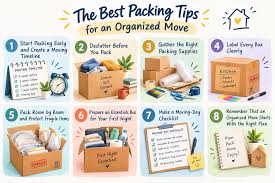
Packing is the most time-consuming part of moving. It is also where most damage happens: plates break because they were packed loosely, boxes collapse because they were too heavy and important items get lost in a sea of unlabelled cartons. Professional movers follow simple principles that keep belongings safe and make unpacking easy. Whether you are moving a studio apartment or a family house, these twenty expert tips will help you pack efficiently and protect everything you own.
Before You Start
1. Declutter First
Never pack something you do not need. Sort items into keep, sell, donate and recycle before you start packing. Every item you leave behind saves packing time, transport space and unpacking effort.
2. Gather Quality Supplies
Use sturdy moving boxes in a few standard sizes, strong packing tape, packing paper, bubble wrap, stretch film and permanent markers. Weak, reused grocery boxes can collapse under weight. Many moving companies rent durable plastic moving crates, which are stackable and environmentally friendly.
3. Make a Packing Plan
Start with rooms and items you use least, such as storage areas, guest rooms and seasonal items. Leave the kitchen and bathroom essentials until the last days.
4. Set Up a Packing Station
Choose one area of the home for packing with all supplies at hand. This keeps the work organised and saves time searching for tape and markers.
Packing Techniques
5. Heavy Items in Small Boxes
Books, tools and canned goods should go in small boxes. Large boxes filled with heavy items are hard to lift and likely to break. Use large boxes for light items such as bedding, pillows and lampshades.
6. Keep Boxes Under 20 Kilograms
A good rule of thumb is that one person should be able to lift every box comfortably. Overweight boxes slow down the move and increase the risk of injuries and damage.
7. Fill Empty Spaces
Items that move inside a box are more likely to break. Fill gaps with packing paper, towels or clothing so the contents stay firmly in place.
8. Pack Plates Vertically
Wrap each plate individually and place it on its edge, like records in a crate. Plates are much stronger vertically than when stacked flat. Use dish boxes or extra padding at the bottom and top.
9. Wrap Glasses Individually
Stuff glasses with packing paper and wrap them separately. Place the heaviest items at the bottom of the box and the lightest at the top.
10. Protect Electronics
Pack TVs, monitors and computers in their original boxes if you still have them. Otherwise, use thick padding and mark the boxes clearly. Take a photo of the cable connections before unplugging devices so reinstallation is easy.
11. Use Wardrobe Boxes for Clothes
Wardrobe boxes with a hanging rail let you move clothes directly from the closet without folding. Folded clothes can also be packed in suitcases and bags, saving boxes.
12. Seal Liquids
Tighten caps on bottles and cover openings with plastic film before closing them. Pack liquids in sealed bags and transport cleaning chemicals separately from food.
Furniture and Large Items
13. Disassemble Furniture
Remove legs from tables, take beds apart and remove shelves from bookcases. Put screws and small parts in labelled bags and tape them to the furniture or keep them in a dedicated box.
14. Protect Surfaces
Wrap furniture in moving blankets or stretch film to protect against scratches. Protect corners of mirrors and glass tables with cardboard corner guards.
15. Empty Drawers
Drawers full of items make furniture heavy and unstable. Empty them, or secure lightweight contents and the drawers themselves with stretch film.
Labelling and Organisation
16. Label Every Box on Two Sides
Write the destination room and a short content description on at least two sides of the box, not just the top. When boxes are stacked, the top is often hidden.
17. Use a Colour Code
Assign a colour to each room and mark boxes with coloured tape or stickers. Put the same colour on the door of the corresponding room in the new home so movers know where to place each box.
18. Keep an Inventory
Number your boxes and keep a simple list of what each contains. This makes it easy to check that everything arrived and to find specific items quickly.
Final Tips
19. Pack an Essentials Box
Prepare one box for the first day and night in your new home: toiletries, medicines, phone chargers, a change of clothes, toilet paper, a kettle, snacks and basic tools. Keep it with you rather than in the moving truck.
20. Keep Important Documents Separate
Passports, contracts, bank documents and valuables should travel with you personally. Do not pack them in regular boxes.
Sustainable Packing
Moving generates a lot of packaging waste. Choose rentable plastic crates, reuse boxes and recycle cardboard and plastic properly. Guidance on waste sorting and recycling in Finland is available from InfoFinland, and general advice on reducing waste is offered by the Ministry of the Environment.
When to Call the Professionals
If you are short on time or have many fragile items, professional packing services can save you days of work. Experienced packers work quickly, use the right materials and know how to protect valuable belongings. In the Pirkanmaa region, Muuttopalvelu Tampere professionals offer packing as part of a complete moving service.
Conclusion
Good packing is the foundation of a successful move. Declutter first, use quality supplies, pack heavy items in small boxes, protect fragile items carefully and label everything clearly. Follow these twenty tips, and your belongings will arrive safely and unpacking will be faster and far less stressful.