

Introduction
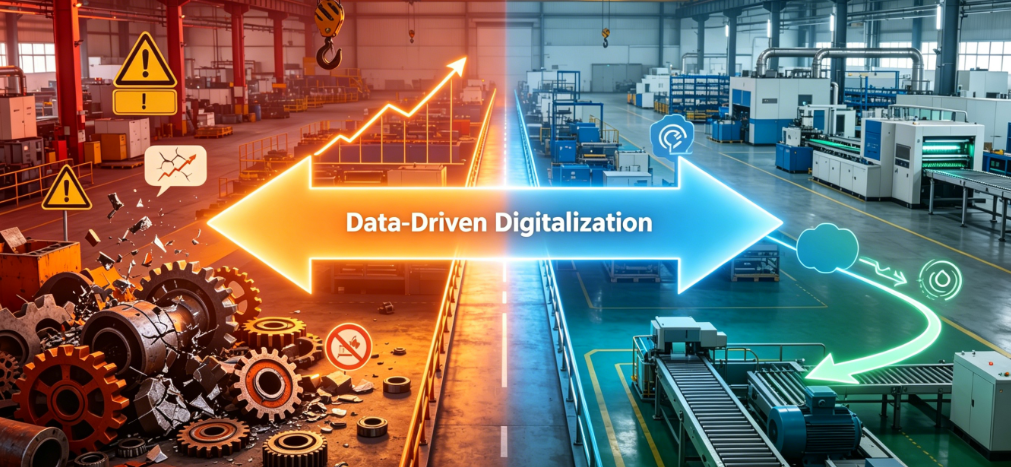
In the highly competitive environment of precision manufacturing, where accuracy must be precise to microns, any fault could bring an entire manufacturing process to a halt. Naturally, all eyes fall on such tangible cost areas as the use of raw materials, machine utilization and labor. Ancillary operations like data management are also subject to this narrow outlook and tend to be considered from a financial point of view as overhead, or simply marginal cost. However, this approach fails to grasp the essence of the situation. A good data management solution is not just a source of expense but, rather, represents an investment in two key qualities: risk avoidance and continual cost reduction potential, resulting in a reduction of Total Cost of Ownership (TCO) of manufactured parts.
What is the core advantage of outstanding CNC machining services: technology or data?
Deploying and sustaining a data management system in CNC drilling services certainly involves certain costs. It includes expenditure on dedicated software and sensors, as well as the labor put forth by engineers and technicians in installing and organizing the data, and the ongoing need to validate and sanitize it. These costs are represented in the company’s quarterly Profit and Loss statements. For a manager who must demonstrate immediate savings, cutting the costs associated with data management systems can easily be perceived as an easy way out. Such costs are treated like any other administrative cost, measured not by their broader implications but by the dollar amounts invoiced.
How to Build a Process Data Bridge for Collaboration with CNC Machining Service Providers?
The full effect of data management lies in taking it beyond the quarter and into years. It comes in solving those persistent and costly issues that hurt profit margins and damage customer relations. Here is an outline of how focusing on data leads to attacking TCO optimization on its core principles.
From Defensive Prevention to Offensive Optimization
A system works on two fronts: prevention and optimization. To begin with, it sets out the base-level prevention framework.
- Reducing Communication and Rework Costs
Single-source data solves specification and revision inconsistencies, reducing costly communication errors. In turn, it prevents scrap, rework, and delays that cause losses and harm customer relations.
- Avoiding Batch Quality Issues
By using traceability and analytics, in-process data becomes connected to quality outputs. In this way, potential abnormalities are discovered, helping to avoid batch quality problems from becoming expensive catastrophes.
Enabling Continuous Process Optimization
In addition to prevention, data enables proactive enhancements. It gives engineers the opportunity to switch from using intuition to using data for process optimization. By examining things such as tool wear and cycle times, the parameters are optimized scientifically to ensure that the per-part cost is lowered.
How does data transparency ensure consistent quality of outsourced components?
Therefore, the investment in data management is fundamentally a capital allocation decision to purchase two critical, intangible assets.
Safeguarding Operations and Driving Efficiency
The investment strategy is to secure acquisition of two essential capabilities for excellence in production. The first capability acquired is security against risks, both operational and financial in nature.
- Mitigating Catastrophic Quality Losses
This strategy is a form of insurance against catastrophic, albeit rare, events such as a batch quality failure. It allows prediction of and mitigation before problems become widespread enough to require recall or shut down of operations completely.
- Avoiding Persistent Mistakes In Communication
It also eliminates the problem of costly, frequent mistakes due to bad internal communication by providing a unified source of information where any confusion can be clarified without wastage of resources or damage to reputation.
Establishing Competitive Costs Through Data Management
Secondly, it buys an engine of ongoing cost improvements. Not only does it help avoid losses, it provides knowledge on which process optimization can be built. This leads to continuous cost reduction through improvement in precision machining processes.
When selecting a CNC machining partner, what digital capabilities should be evaluated?
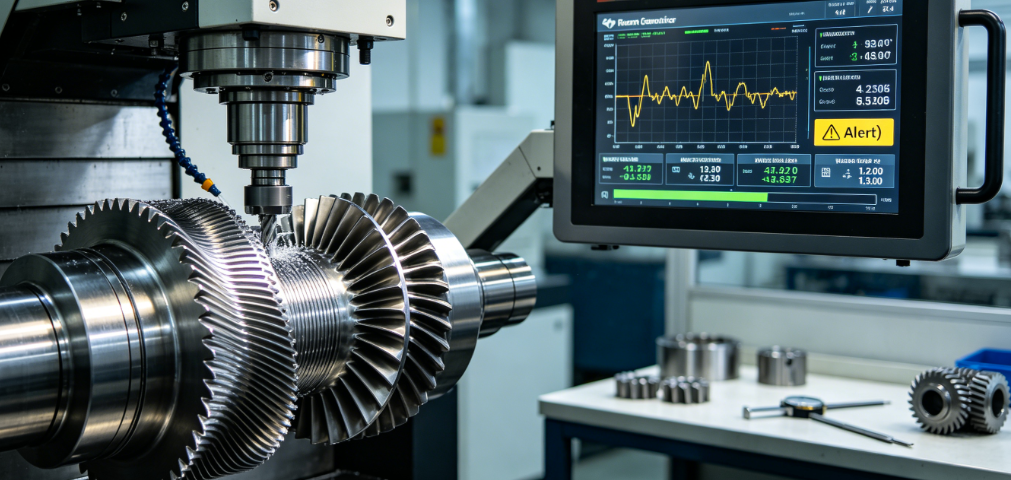
Look at the case of LS Manufacturing, a major player in the manufacture of complex components. Under pressure to cut costs, while at the same time producing products that met increasingly stringent tolerance requirements from their aerospace customers, which deployed a plant-wide data intelligence solution.
Among the most notable examples of LS Manufacturing’s use of data intelligence was an effort to analyze high-nickel alloy turbine parts. The analysis revealed an interesting link between tool vibration and premature failure.They established a real-time monitoring rule. In one instance, the system alerted operators to a developing vibration anomaly. The tool was changed preventatively, avoiding a potential batch of out-of-spec parts that would have cost over 50,000 in material and lost time.Furthermore,the collected data was used to refine the tooling strategy for that material,optimizing the machining process and increasing tool life by 2250k near-miss and continuous cost reduction (the 22% longer tool life).
For organizations looking to understand how to implement such systems, exploring resources on how to reduce scrap rates in precision manufacturing is an excellent starting point. The journey often begins with a focused custom CNC machining online on a specific production line to prove the value before scaling.
Conclusion
Although data management might be considered a small short-term expense, it actually amounts to a long-term strategy. For an organization like LS Manufacturing, which looks into the future, it reduces the Total Cost of Ownership (TCO) by eliminating any chances of mistakes and ensuring that processes continue to improve continuously. In essence, it buys necessary, long-term skills in avoiding risks and reducing costs.
Author Bio
Alex Chen is a manufacturing operations strategist with over 20 years of experience specializing in lean digital transformation. He has partnered with numerous precision engineering firms, including leaders in the aerospace and medical sectors, to implement data-driven systems that reduce waste, ensure quality, and drive sustainable profitability.
FAQs
Q1: As a client, do I need to invest in specific software systems for digitalization in order to collaborate with a supplier like this?
A: Typically, no. Professional CNC service providers with strong digitalization capabilities will take the lead in this process. They should be able to provide structured data deliverables (such as process reports and inspection reports). You simply need to clearly define your data requirements (e.g., SPC data for critical dimensions); the focus of the collaboration lies in defining the specific data dimensions and formats that need to be shared.
Q2: Would data transparency and digitalization lead to increased procurement costs on my end?
A: While there will be a marginal cost incurred initially due to efforts put in place in managing the data, in the long term, the Total Cost of Ownership (TCO) is greatly reduced because there are no communication misinterpretations, no batch-level quality problems, and processes are optimized, lowering the per-part cost. Effectively, this is a process of hedging against risk and reducing costs continuously.
Q3: What can help me validate whether a CNC manufacturer’s digitalization skills are real or not?
A: Test them out by asking for certain data when inquiring or in the prototyping stage. For example, ask them to give their reasoning behind how they machine certain elements of your part or to explain previous machined parameters and yields for parts in similar material. When a supplier can respond to such questions using data very easily, chances are they are legit.
Q4: Would this methodology work in case of small batch production or components being in R&D?
A: Without a doubt! In fact, even while being in R&D, documenting all the machining information on each prototype, including problems and their respective solutions, will create a useful “seed” for pilot production and large-scale manufacturing in the future.
Q5: If my existing vendor does not have the capability to provide the above digitalization, what should I do?
A: This can be brought up as a requirement for betterment or as a way to evolve further cooperation. The simplest step is to request that an FAI document be made in a more organized manner. On the other hand, whenever you start working on new projects or searching for a backup supplier, data cooperation should always be among your criteria.
