

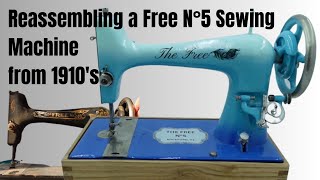
Sewing machines have a way of outlasting almost everything else in a household. Where most appliances get replaced every five to ten years, a well-made sewing machine, especially an older Singer or a solidly built vintage model, can keep running for decades with the right care. The problem most people run into isn’t the machine itself, it’s finding the right parts when something finally does wear out.
Why Old Machines Are Worth Saving
There is a genuine mechanical case for holding onto an older sewing machine rather than replacing it outright. Many vintage models, particularly all-metal machines built before the widespread shift to plastic components, were engineered with a durability that modern budget machines rarely match.
The catch is that these machines were built in an era before universal parts standardisation, which means a bobbin case, tension assembly, or belt that fits one model often will not fit another, even within the same brand.
The Parts Problem That Stops Most Repairs
This is where a lot of sewing machine restorations stall out. Someone opens up an old machine, identifies a worn belt or a sticking tension disc, and then discovers that the local sewing shop either does not stock parts for that specific model or cannot confirm compatibility with confidence.
The solution is sourcing parts through a supplier that organises its inventory by exact make and model rather than generic categories. A collection built specifically for the vintage sewing machine owner, alongside anyone running a more modern model, covers brands including Singer, Brother, Janome, BabyLock and others, for home, industrial and serger machines alike.
What to Check Before Ordering a Replacement Part
A few checks before ordering save a lot of frustration later. First, confirm the exact model number, usually stamped on a plate on the machine’s body or base. Second, take a clear photo of the worn or broken part in place before removing it. Third, for older machines, check whether the part is described as an original manufacturer part or a properly fitted aftermarket equivalent.
Common Repairs Worth Attempting at Home
Some sewing machine repairs are genuinely approachable for a confident beginner. Replacing a worn drive belt, cleaning and re-oiling the internal gears, and swapping out a bobbin case that has developed burrs or inconsistent tension are all repairs that mostly require patience and the correct replacement part rather than specialist tools.
A Quick Word on Sourcing Genuine Versus Aftermarket Parts
Not every part needs to be sourced directly from the original manufacturer to work well. Aftermarket parts, when properly fitted to the exact model, often perform just as reliably as original equipment, and can be considerably more affordable, particularly for older machines where original parts may be scarce or discontinued entirely.
Why This Matters Beyond Nostalgia
Restoring an old sewing machine isn’t purely sentimental. Older all-metal machines are often mechanically simpler than modern computerised models, which means fewer electronic components that can fail without warning.
Frequently Asked Questions
Can I use a generic replacement part instead of one matched to my exact model?
It is generally not advisable. Components like bobbin cases, tension assemblies, and belts are often specific to a machine’s exact model.
How do I find my sewing machine’s exact model number?
Check the plate on the machine’s body or base, which typically lists the model number separately from the brand name.
Is it worth repairing an old sewing machine instead of buying new?
Often yes, particularly for older all-metal machines, which tend to be more durable and mechanically simpler to repair.
What sewing machine repairs are reasonable to attempt at home?
Replacing a drive belt, cleaning and oiling internal gears, and swapping a worn bobbin case are all approachable for a patient beginner.
Do parts suppliers carry components for both vintage and modern machines?
Yes, many specialist suppliers organise stock by exact make and model, covering both vintage machines and current models across major brands.
