

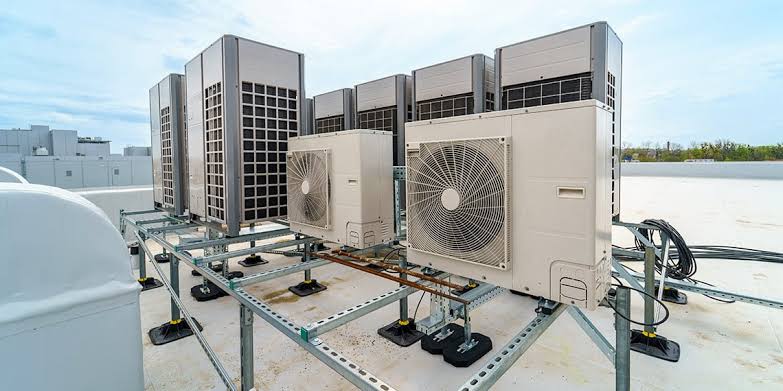
One of the biggest challenges in commercial roofing is working around rooftop HVAC equipment. Most commercial buildings have air conditioning units, exhaust fans, make-up air units, vents, and other mechanical equipment installed directly on the roof. Replacing the roofing system requires careful planning to ensure these systems remain protected while creating a completely watertight roof.
Before any roofing work begins, contractors perform a detailed inspection of the rooftop equipment. They identify HVAC units, gas lines, electrical conduits, roof drains, skylights, and other penetrations that require special attention. Every piece of equipment is documented so the roofing crew can develop an installation plan before the roof tear-off begins.
During the roof replacement, crews work carefully around each HVAC unit. In some cases, the units remain in place while roofing materials are replaced around the curbs. If equipment has reached the end of its service life or prevents proper roofing installation, a crane may be used to temporarily lift the unit so the roofing system underneath can be replaced correctly before setting it back into position.
Proper flashing is one of the most important parts of roofing around HVAC equipment. Every curb, pipe, vent, and penetration must be flashed according to the roofing manufacturer’s specifications. These flashing details help prevent water from entering around the equipment, which is one of the most common sources of commercial roof leaks.
Commercial roofing contractors also inspect the condition of rooftop curbs that support HVAC units. If the curbs are deteriorated, damaged, or no longer meet current standards, repairs or replacement may be recommended before installing the new roofing membrane.
Protecting rooftop equipment throughout the project is equally important. Roofing debris, dust, and loose materials should be kept away from HVAC units to prevent damage to coils, filters, and mechanical components. Experienced roofing crews use protective coverings and maintain clean work areas while replacing the roof.
Communication between the roofing contractor and the building’s HVAC contractor is essential, especially when equipment must be disconnected, lifted, or replaced. Coordinating schedules helps minimize downtime and ensures the building’s heating and cooling systems are returned to service as quickly as possible.
After the roofing membrane is installed, contractors carefully inspect every HVAC penetration, flashing detail, and curb to verify the roof is completely watertight. Welded seams on TPO and PVC systems or properly adhered flashing on EPDM systems are inspected to ensure they meet manufacturer requirements.
Routine maintenance after installation is also important. Building owners should have both the commercial roof and rooftop HVAC equipment inspected regularly. Service technicians should avoid damaging the roofing membrane while performing maintenance, and any accidental punctures should be repaired immediately to prevent leaks.
A successful commercial roof replacement depends on more than just installing a new membrane. Proper planning, experienced roofing crews, quality flashing, and close coordination with HVAC professionals help create a durable roofing system that protects the building while allowing rooftop mechanical equipment to operate safely and efficiently for many years.
