

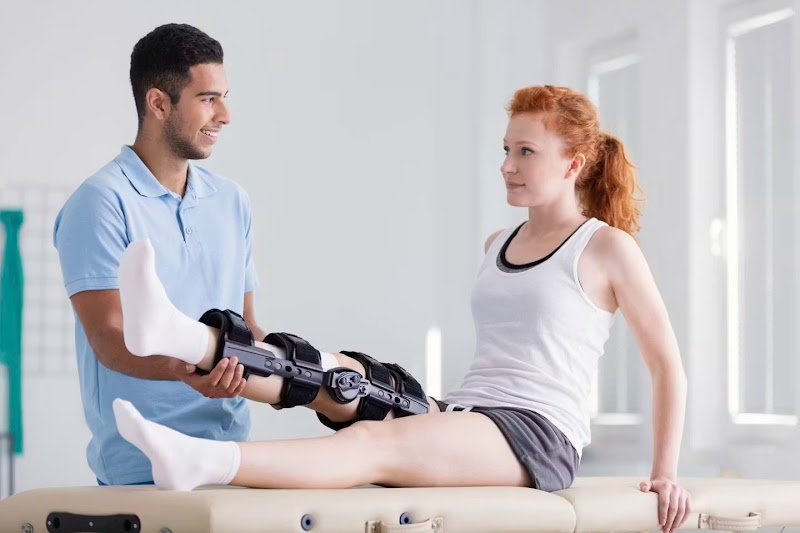
Surgery fixes the problem it was designed to fix. What comes after is its own challenge. Swelling and stiffness after surgery are not complications in most cases. They are the body doing exactly what it is supposed to do. The issue is that without the right guidance, that normal healing response can overstay its welcome and turn into a long-term limitation.
At Total Performance Physical Therapy Harleysville, we work with post-surgical patients through this phase every day. We work with the healing process, not against it. The difference is in how that process is directed and what it leaves behind.
Why Swelling and Stiffness Happen
The body does not distinguish between a surgical incision and any other kind of injury. Something was cut, something was repaired, and the response was immediate. Fluid rushes to the area, white blood cells arrive to begin repair, and the surrounding tissue swells. That swelling limits movement, which the body partly intends. Protecting the surgical site from excessive load in the early days is a reasonable biological response.
The problem is what happens when that protection continues past its useful point. Joints that are not moved begin to stiffen. Scar tissue forms along the lines of least resistance, which in the absence of movement means it forms in ways that restrict range of motion. What started as a sensible protective mechanism becomes the thing standing between the patient and full recovery.
How Physical Therapy Addresses It
Improve mobility after surgery is one of the primary goals of post-surgical rehabilitation, and physical therapy approaches it from several directions simultaneously.
Circulation improves with movement. Gentle, guided exercise in the early post-surgical period keeps blood and lymphatic fluid moving through the area, which actively reduces swelling rather than just waiting for it to resolve on its own. Stiff, immobile tissue holds fluid. Moving tissue drains it.
Range of motion work begins as soon as it is appropriate for the specific surgery and healing stage. The timing matters. Too early and the repair is at risk. Too late and scar tissue has already organized in ways that are much harder to address. Post-surgical physical therapy in Horsham at Total Performance Physical Therapy works within the specific parameters of each procedure to find that window and use it effectively.
Muscles do not wait around during immobilization. They drop off quickly, and rebuilding them requires deliberate, progressive loading that matches what the healing tissue can handle at each stage. Without that, the joint may regain range of motion but lack the strength to use it safely and confidently.
Manual therapy addresses tissue tension and joint restriction that exercise alone cannot fully reach. Scar tissue that has formed with restricted mobility, tight muscles compensating around the surgical site, and joint stiffness that has set in during immobilization all respond to hands-on treatment in ways that accelerate the recovery that exercise alone achieves more slowly.
Why Starting Early Changes the Outcome
The window between surgery and the onset of significant scar tissue organization is where early rehabilitation makes its biggest impact. Swelling and stiffness after surgery that are addressed in the first days and weeks respond far more readily than those that have been present for months.
Early rehabilitation means less swelling at the two-week mark, better range of motion at six weeks, stronger muscles at three months, and a faster return to daily function overall. It also means the scar tissue that forms does so in a more organized, less restrictive pattern because the tissue was being moved during its formation.
Total Performance Physical Therapy Harleysville builds early rehabilitation programs that are timed appropriately for the specific surgery, the surgeon’s protocol, and where the individual is in their healing. Not everyone starts at the same point, and the program reflects that.
Managing It Between Sessions
What happens between physical therapy visits matters as much as what happens during them. Staying as active as the recovery guidelines allow for keeps fluid moving and prevents the joint from stiffening back up between sessions. Prescribed home exercises are not optional extras. They are the continuation of treatment that reinforces the gains made in the clinic.
Elevating the affected limb when resting reduces the fluid accumulation that contributes to swelling. Ice, when advised by the treating therapist or surgeon, helps manage the local inflammation that accompanies early movement. Following the recovery plan consistently, including rest periods and activity restrictions, gives the tissue the conditions it needs to heal well rather than working against that process.
What Delays Recovery
Skipping sessions, neglecting home exercises, returning to full activity before the tissue is ready, and pushing through significant pain rather than reporting it all slow the recovery that physical therapy is trying to support. Improving mobility after surgery is a process that requires consistency, not just attendance.
Post-surgical physical therapy in Horsham at Total Performance Physical Therapy keeps patients on the right side of that line, progressing when progress is appropriate and pulling back when the tissue needs more time. That judgment, applied consistently throughout recovery, is what separates a good outcome from one that leaves the patient managing residual limitations for years.
The Bottom Line
Swelling and stiffness after surgery are expected. Staying stuck in them is not. Physical therapy provides the structure, the hands-on treatment, and the progressive exercise programming that guides the body from the early post-surgical phase through to full functional recovery.
The sooner that process begins within the appropriate healing parameters, the better the outcome tends to be. Total Performance Physical Therapy Harleysville and post-surgical physical therapy in Horsham are built around exactly that: getting the timing right, doing the right work at each stage, and making sure the recovery leads somewhere worth going.
