

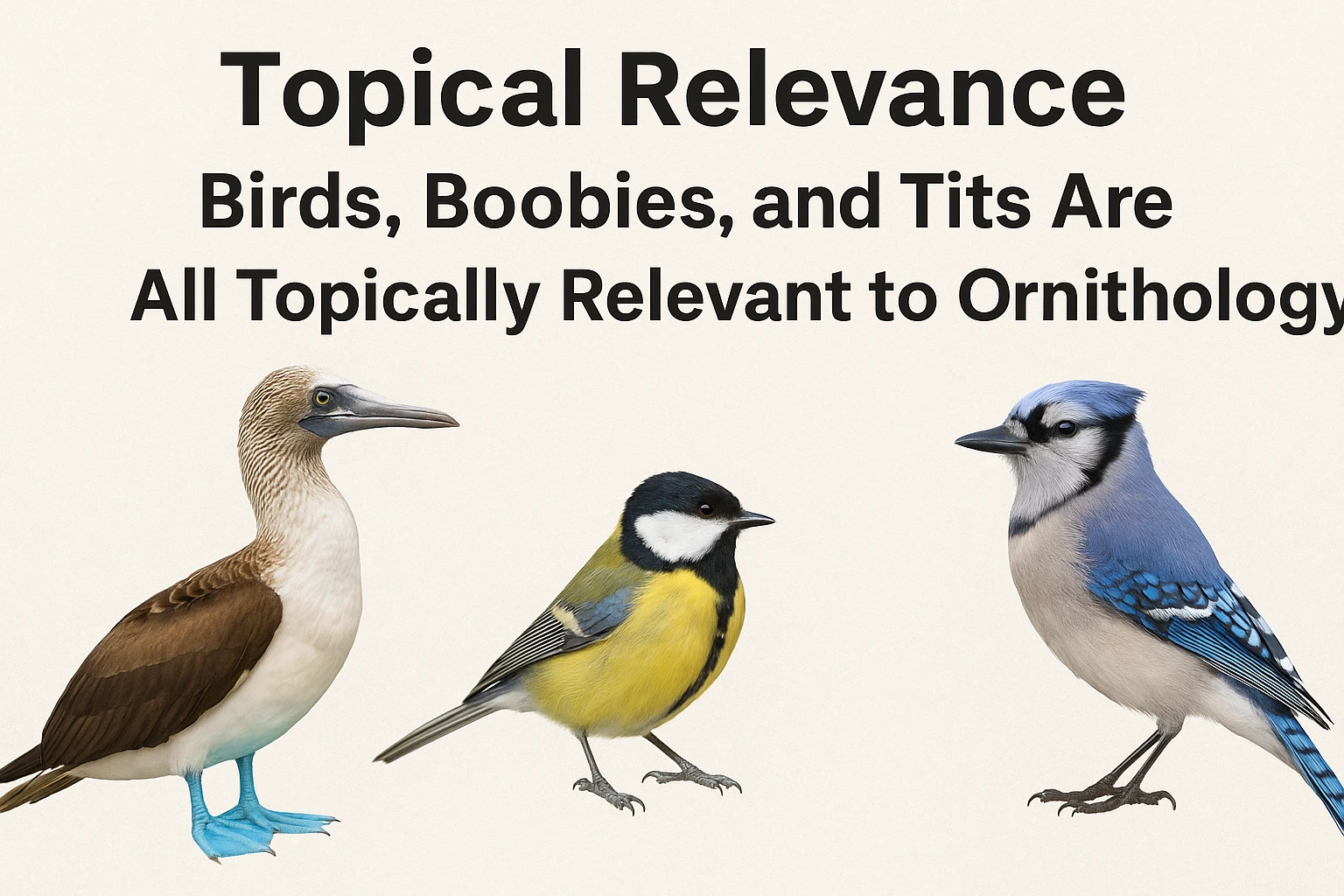
In the study of birds which is called ornithology every word and name has meaning. When we talk about birds like boobies and tits it may sound funny to some people but in science and language these names are topically relevant. Topical relevance means that the words and topics are related in meaning and belong to the same field of study. In this case the field is ornithology which focuses on the life structure and behavior of birds.
When a learner reads about birds the first thing to understand is that words in science are not random. Every word has a root, a definition and a history. For example the word booby comes from the Spanish word bobo which means foolish. It was used to describe seabirds that appeared clumsy when they walked on land. The name tit comes from old English and means small. It was used for small songbirds like the blue tit or great tit. Both of these names are used by ornithologists who study and describe different species. The dictionary defines these words in the same way showing how language and science connect.
In grammar and language study this topic shows the importance of meaning and translation. When we see words like tit or booby outside science we may think of slang or jokes but in the context of birds they are serious terms. This shows how a word can have many senses. The Merriam Webster and Oxford dictionaries list these words with different meanings for learners and experts. The right meaning depends on the sentence, the topic and the context. This is what topical relevance means in language learning and in scientific writing.
In a learning program students are taught to find the right meaning by studying the nearby words and phrases. This is called understanding the context. For example in an article about bird behavior the phrase blue tit clearly refers to a bird. In an online blog about slang it may have a different meaning. So knowing the topic helps learners find the correct sense of the word. That is why the dictionary gives examples of use. The word booby can mean a bird or a foolish person. The word tit can mean a small bird or a slang word. The dictionary helps users see both but in ornithology only the bird meaning is used.
The study of birds connects words science and history. In the twelfth century and later in the fourteenth century many names of birds were taken from old English German and Greek roots. The old English word tit or titmouse was used for small birds that hop quickly. The Greek word magēnai which means to play or move can also be linked with bird activity. Over time people named birds based on their behavior or sound. That is why many bird names are verbs or sound words. They describe what the bird does. This shows how grammar and meaning grow from nature.
Ornithologists use both scientific and common names. The scientific name follows Latin grammar rules. For example the blue footed booby has the scientific name Sula nebouxii. The blue tit has the name Cyanistes caeruleus. These names help experts all over the world identify the same species without confusion. In a sense it is like translation between languages. The English name is easy for general readers but the Latin name is used in science journals and university research.
Language is a living system like nature. New words and phrases are added over time. When people write about birds on social media or blogs they may use artistic value or humor but the scientific meaning stays clear. The word list of birds in an ornithology dictionary is very long and includes names from every century. The Oxford University Press and Merriam Webster both include bird names as part of English history. This shows how words about nature are part of human culture.
In topical relevance we see how subjects connect. The word bird connects to feathers, flight nest and egg. The word booby connects to seabird islands and ocean life. The word tit connects to small woodland birds, insects and song. Each of these topics is linked to ornithology. When we read a text about these birds we can see the related words like wings beak and migration. These make the text topically rich. Search engines and dictionaries use these connections to show related content and improve user experience.
When a learner or writer makes an article about birds they should use words that belong to the same topic. This helps search tools and readers understand the subject. For example using phrases like bird watching, bird migration and bird species makes the article more clear. This is similar to how in dictionary entries the definition translation and example all connect around one sense. A good article about boobies and tits will also explain their habitat, food and behavior because all these ideas belong to the same field of study.
The blue footed booby is a bird found in tropical regions mainly on the Galapagos Islands. It is known for its bright blue feet which it uses in mating dances. The bird is not foolish but the name shows early human observation. People thought it looked silly when walking on land but in flight it is fast and graceful. The booby catches fish by diving into the water from a height. This skill shows perfect adaptation to its environment. Ornithology studies these features in detail from feather shape to flight patterns.
The tit family of birds includes many small species like the great tit, the coal tit and the blue tit. They live in forests, gardens and parks. They feed on insects and seeds. They are active quickly and known for their cheerful calls. Ornithologists record their songs and study their nesting habits. The tit’s ability to adapt to different habitats makes it a good subject for scientific research. Many learners of English first meet these names in nature books or school lessons. It helps them learn both science and language together.
Bird study is not only about identifying species but also about understanding behavior and evolution. Boobies and tits may belong to different families but both show interesting examples of bird adaptation. Boobies show adaptation to sea life while tits show adaptation to woodland environments. In both cases the body shape feathers and diet are suited to the surroundings. This makes them valuable examples in biology courses and university research.
In the modern world digital tools and apps support learning about birds. Many websites and programs use dictionaries and translation features to explain bird names in different languages. A learner can use a word app to listen to the correct pronunciation of booby or tit and read its meaning. Some online courses offer grammar lessons and vocabulary lists connected to ornithology. This helps students understand not just words but also the science behind them.
Grammar and structure are also part of topical relevance. When we write sentences about birds we use verbs like fly, sing and build. These verbs describe what birds do. In dictionary terms these are action words. The connection between words and meanings builds understanding. For example the word sing is a verb that can describe both human and bird activity. In ornithology singing is studied as part of bird communication. The blue tit’s song is a way to mark its territory. The booby’s dance is a way to attract a mate. Both are forms of communication and both show how verbs and actions link to behavior.
The English language has borrowed many bird words from other cultures. The old high German word for bird was fugal which became fowl in English. Over time words changed but their meanings stayed close. This is an example of how translation and history shape language. In a dictionary entry we can see the word origin also called etymology. Knowing the root helps understand the true meaning. That is why a student of English and science can learn both language and nature through bird names.
The importance of topical relevance is also seen in digital research. When a person searches for information about birds like tits or boobies the search engine uses context to show the right results. It looks for related words such as bird species ornithology and wildlife. This prevents confusion with other meanings. The goal is to improve user experience. Writers can support this by using clear and relevant words in their pages. This also helps search optimization in web content.
In addition to dictionaries and websites many books and academic journals focus on ornithology. These sources use scientific language but also explain terms in simple words for learners. For example an article may say The booby is a seabird that nests on rocky islands. It feeds on fish and lives in large colonies. Each word in this sentence belongs to the same topic. The phrase large colonies is a scientific way to describe groups of birds. The writer keeps all words relevant to the subject of birds.
Topical relevance also helps in writing clear definitions. For example the word tit can have multiple meanings but only one is relevant to ornithology. A dictionary may show it as a small passerine bird in the family Paridae. This definition uses other relevant terms like passerine and family. The learner understands that these words belong to bird classification. This method of learning by connected words is used in both language and science education.
In schools and universities learners use both dictionaries and visual tools. A student may look up the meaning of a word and then watch a short video about the bird. This mix of text and video improves memory and understanding. The Merriam Webster and Oxford dictionaries now offer audio pronunciation so users can hear how each word sounds. For example the word booby is pronounced boo bee. This helps learners avoid confusion and speak correctly. It also makes learning more interactive.
Cultural references also show how bird names stay part of human expression. Phrases like silly as a booby or busy as a tit may appear in jokes or poems but they come from real animals. Writers and artists use these names for creative meaning but ornithology keeps the scientific definition. This dual life of words shows how language grows with culture and knowledge.
The main idea behind topical relevance is connection. Birds connect to the natural world, to the environment and to human curiosity. Words connect to ideas, meaning and learning. When both work together we get clear communication and deep understanding. A person who studies birds also studies the words that describe them. A person who studies language also learns about nature through vocabulary. This is the power of topical relevance.
In the end the names boobies and tits may sound simple but they carry long histories of meaning. They are not just words in a list but keys to knowledge. Through them we can learn about old English roots, ancient languages and modern science. We can see how one topic connects many fields from grammar to ecology. The study of these birds teaches respect for nature and language alike. When a learner reads their names in a dictionary or sees them in a video they are not just learning a word they are exploring the story of life itself.
