

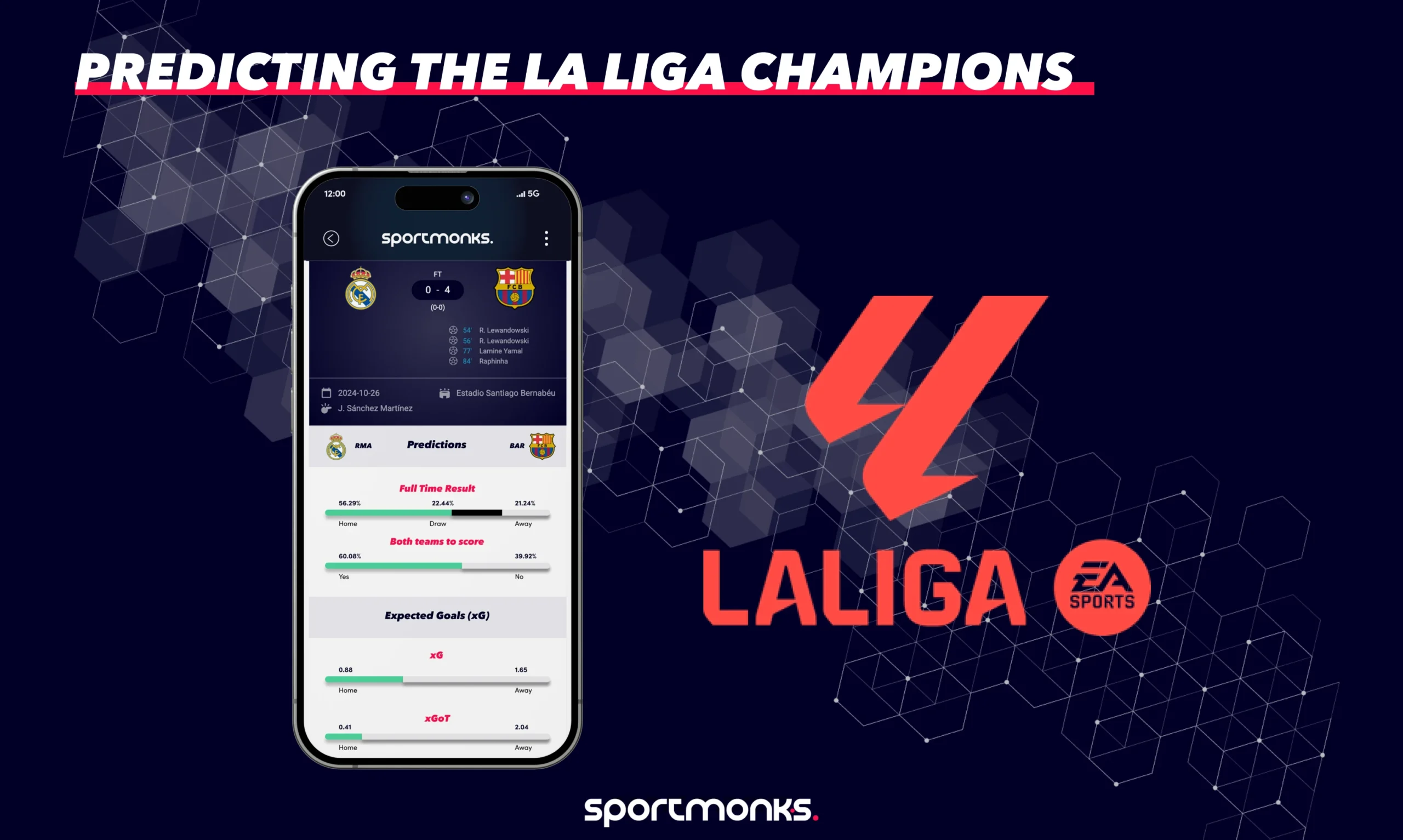
La Liga 2024/25 produced a full season of detailed numbers on goals, expected goals, form, and discipline, all of which were collected across multiple public statistics portals. The real challenge for bettors and serious fans was not finding data but deciding which figures to trust and how to turn them into concrete yes/no decisions on specific matches instead of drowning in charts.
Why Using Stats Websites For Match Selection Is A Reasonable Approach
Modern La Liga coverage includes advanced xG models, detailed team tables, and player metrics that reveal much more than the final score, exposing whether a result was dominant or deceptive. When that information is organised by independent stats providers, it allows an ordinary user to see structural team strengths and weaknesses over 38 matches without building their own database, which dramatically lowers the barrier to systematic analysis.
The cause–effect chain is straightforward: more accurate information about chance quality, defensive solidity, and recent trends leads to better probability estimates, which in turn makes it easier to reject bad bets and focus on situations where prices seem misaligned with performance. This effect is especially visible in a league where Barcelona and Real Madrid dominate headline narratives, because stats websites help detect when mid‑table teams are quietly overperforming or when a big name’s results hide underlying decline.
Choosing One Perspective: Data-Driven Betting For La Liga
A data‑driven approach treats La Liga 2024/25 not as a sequence of stories but as a 20‑team environment where every fixture can be mapped through repeatable metrics. Instead of starting from loyalty to a specific club or intuition about “big match mentality,” you begin with league‑wide tables and xG rankings that describe how often each team created and conceded dangerous chances over the season.
This perspective matters because it shifts the focus from isolated highlights to long‑run patterns: a team with modest shot volume but very high conversion may be running hot, while another with strong xG but modest results might be undervalued by casual observers. By treating stats websites as the primary lens, you build a selection process that is easier to test and refine than one built purely on memory of televised matches.
Identifying The Key Types Of La Liga Stats That Actually Help Selection
Not every metric on a stats portal meaningfully influences match outcomes, so the first task is to separate noise from signal. For La Liga 2024/25, three clusters of metrics consistently shaped realistic expectations: team‑level expected goals, basic league table data, and recent form indicators such as last‑five results and goal differences.
A useful way to group those inputs is:
- Structural strength: season‑long goals for/against, points, and xG tables, which show whether a team’s place in the standings matches its underlying chance quality.
- Short‑term dynamics: form tables and last‑five results, which capture current momentum without overreacting to a single match.
- Contextual risk factors: disciplinary records, home/away splits, and xG against, which highlight where a team becomes vulnerable under pressure.
Interpreting stats websites through these categories helps you ignore redundant detail—like obscure possession metrics that rarely translate directly into betting edges—and focus on numbers that change your assessment of win, draw, and loss probabilities. Over time, this separation allows you to refine which specific pages and tables you open first when screening a La Liga round.
Turning xG And League Tables Into Practical Shortlists
Expected goals became one of the clearest ways to spot misalignment between La Liga 2024/25 results and underlying performances, because it aggregates the quality of chances created and conceded over many matches. For example, team xG data showed Barcelona generating the highest expected goals in the league while Real Madrid combined strong attacking numbers with excellent xG against, indicating both sides were structurally superior beyond simple scorelines.
A practical shortlist process works by comparing standard tables with xG‑based tables:
- Open the official or widely cited league table to see points, goal difference, and recent form for all 20 teams.
- Open an xG league table or team xG rankings and note teams whose underlying chance balance is notably better or worse than their points tally.
- Mark fixtures where a team with strong xG but modest results faces a team with weaker underlying numbers but higher position, signalling a potential perception gap.
By working through this sequence, you create a small pool of matches where stats suggest a narrative different from the raw table, which is precisely where prices are more likely to misprice true probabilities. The impact is not automatic profitability but a more disciplined focus on situations where data challenges public assumption, something that broad, non‑filtered browsing rarely achieves.
Using Stat Tables To Compare Teams Side By Side
Stats websites frequently provide sortable tables for goals, xG, cards, and other metrics, which make it straightforward to compare teams sharing similar positions in the league but different performance profiles. When choosing matches from La Liga 2024/25, side‑by‑side comparison reveals whether a fixture is a clash of similar styles or a meeting of a high‑volume attack against a fragile defence.
A compact comparison table might look like this:
| Team | Position 24/25 | GF | GA | xG per game | xGA per game | Cards per game | Last‑5 form |
| Barcelona | 1st | 102 | 39 | 2.26 | Competitive low | Moderate | WLWWW |
| Real Madrid | 2nd | 78 | 38 | 2nd‑tier xG | Strong away xGA | Moderate | WWWLW |
| Las Palmas | 19th | 40 | 61 | Low xG | High xGA | Higher cards | LLLLL |
| Valladolid | 20th | 26 | 90 | Worst xG cluster | Worst xGA cluster | Persistent discipline issues | LLLLL |
Comparing teams in this way highlights different decision paths: backing Barcelona at short odds means trusting both elite attacking xG and a stable defence, while trusting Valladolid would mean betting against both poor chance creation and weak resistance across a full season. The table format also makes it easier to recognise that some relegation candidates might defend better than their reputation, suggesting under bets or handicap options rather than simple match‑winner choices.
When A Betting Platform’s Presentation Of Stats Helps Or Hinders
Observation across betting markets shows that the way data is embedded inside an operator’s interface can either reinforce disciplined use of external stats sites or subtly pull users away from their own analysis. In situations where a bettor has already checked independent La Liga numbers on xG and form tables, but then logs in and sees alternative statistics, featured accumulators, and highlighted favourites, the risk is that the on‑screen suggestions overwrite the original plan rather than simply executing it. When a user who has just compared team metrics on specialised portals then moves to place bets through ufabet เว็บหลัก เว็บตรง as their chosen betting platform, the healthiest pattern is to treat their prior notes as fixed instructions and the on‑screen statistics as a secondary reference, otherwise the built‑in suggestions can dilute the data‑driven edge they were trying to construct.
Mechanism: How To Turn Raw Stats Pages Into A Simple Match-Selection Routine
The main failure point with stats websites is overload: too many tabs and metrics turn into confusion instead of clarity. A mechanism that limits you to a short, repeatable sequence reduces that risk and makes it easier to maintain discipline over many La Liga rounds.
A practical routine could be:
- Start from a league table page and mark three to five fixtures you care about, based on position gaps and recent form.
- For each fixture, open xG tables and record both teams’ xG and xGA per game, focusing on home/away context where possible.
- Add disciplinary data—cards per game and recent suspensions—to gauge how likely chaotic matches or late collapses might be.
- Cross‑reference those figures with your own sense of tactical style and motivation, then decide whether the matchup supports a clear angle (for example, attacking favourite versus porous defence, or two cautious sides with low xG).
This mechanism transforms passive browsing into a narrow funnel where every page visit has a purpose, and every metric recorded directly contributes to a final accept‑or‑reject decision on a specific match. The impact is that, over time, you develop a personal template for which stats matter most, rather than reacting to whichever new graph a site happens to promote that week.
Where Stats-Driven Match Selection Commonly Fails
Even when using high‑quality data, several failure modes recur among La Liga bettors who rely heavily on stats websites. One is over‑trusting small‑sample trends, for example treating a five‑match xG surge as a permanent improvement when it may just reflect a soft run of fixtures or finishing streaks.
Another is treating league‑wide averages as destiny in individual matches—assuming that because the league average goals per game sits around a certain level, each fixture must gravitate toward that number, ignoring tactical matchups and situational incentives. Finally, some users treat model outputs as precise forecasts instead of probability ranges, leading to frustration when strong favourites fail in single games despite having clear long‑term statistical edges, a problem that is structural in football’s low‑scoring environment.
When Casino-Focused Activity Dilutes The Benefits Of Stats
In many online ecosystems, the same login that accesses advanced football data also connects to other gambling products, which alters how carefully prepared match selections are applied in practice. After spending time on specialised La Liga stats websites, a user might feel that their decisions are now more grounded and therefore “deserve” higher stakes or extra risk, particularly if they have recently enjoyed a good run. When this sense of confidence is carried over into a broader casino online environment that mixes sports, slots, and table games, the temptation to stretch beyond the original football plan grows, and the disciplined, data‑driven approach that was used to choose matches ends up underwriting impulsive actions that do not rely on any of the La Liga numbers at all.
Summary
Using football statistics websites to select La Liga 2024/25 matches is reasonable because these tools reveal patterns in chance creation, defence, and discipline that are invisible in results alone, giving a clearer basis for estimating probabilities. When you convert league tables, xG rankings, and form data into a simple routine—shortlisting fixtures, comparing structural strength, and checking contextual risks—you reduce noise and focus on matchups where the data meaningfully challenges surface narratives. The approach fails when users treat numbers as guarantees, chase tiny samples, or let other gambling activity override their plan, but when applied consistently it turns stats websites from passive information sources into practical tools for more disciplined La Liga decision‑making.